










A Freak Dismissal on the Global Stage
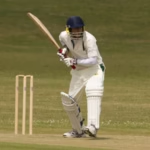
In a bizarre turn of events during the tri-series opener between India A and Sri Lanka A, batter Priyansh Arya was dismissed in a freak run-out that has ignited intense debate across the cricketing world. The incident occurred as Arya attempted to ground his bat, only for the implement to collide with the foot of Sri Lankan wicketkeeper Niroshan Dickwella, effectively blocking the bat from reaching the crease in time.
Context of the Incident
The match, which serves as a critical fixture in the ongoing tri-series, saw India A facing significant pressure early in their innings. The dismissal of Arya compounded the team’s woes, as they had already suffered a top-order collapse that threatened to derail their momentum. Such incidents highlight the fine margins in professional cricket, where split-second movements often dictate the outcome of high-stakes matches.
Analyzing the Technical Breakdown
Replays of the dismissal showed that as Arya lunged to complete the run, his bat struck Dickwella’s foot, causing the handle to jar and the base to lift off the turf. Under the laws of cricket, the batter must have their bat or some part of their body grounded behind the popping crease to be considered ‘in.’ Because the collision prevented the bat from making contact with the ground at the crucial moment, the umpire had little choice but to raise the finger.
Expert Perspectives and Rule Clarification
Cricket analysts have pointed out that while the contact was unintentional, the rules remain rigid regarding the ground state of the bat. Former match officials noted that unless the umpire deems the obstruction to be deliberate interference by the fielder, the dismissal stands as a standard run-out. The incident has reignited conversations regarding ‘obstruction of the field’ versus accidental contact, a gray area that continues to challenge match officials.
The Recovery and Tactical Response
Despite the early setback and the controversial nature of the run-out, India A managed a remarkable recovery led by captain Ruturaj Gaikwad. Gaikwad’s disciplined century served as the backbone of the innings, stabilizing the team after the quick loss of wickets. His ability to anchor the chase allowed India A to post a competitive total, shifting the focus from the earlier controversy to the tactical brilliance required to salvage a difficult game.
Implications for the Series
For the cricket industry, this incident serves as a reminder of the need for precise officiating and the potential for technological review to clarify accidental versus intentional interference. As the tri-series progresses, teams are likely to pay closer attention to positioning during high-speed running between the wickets. Observers should keep a close watch on how the International Cricket Council (ICC) addresses similar scenarios in future briefings to ensure the spirit of the game is upheld without compromising the letter of the law.


