




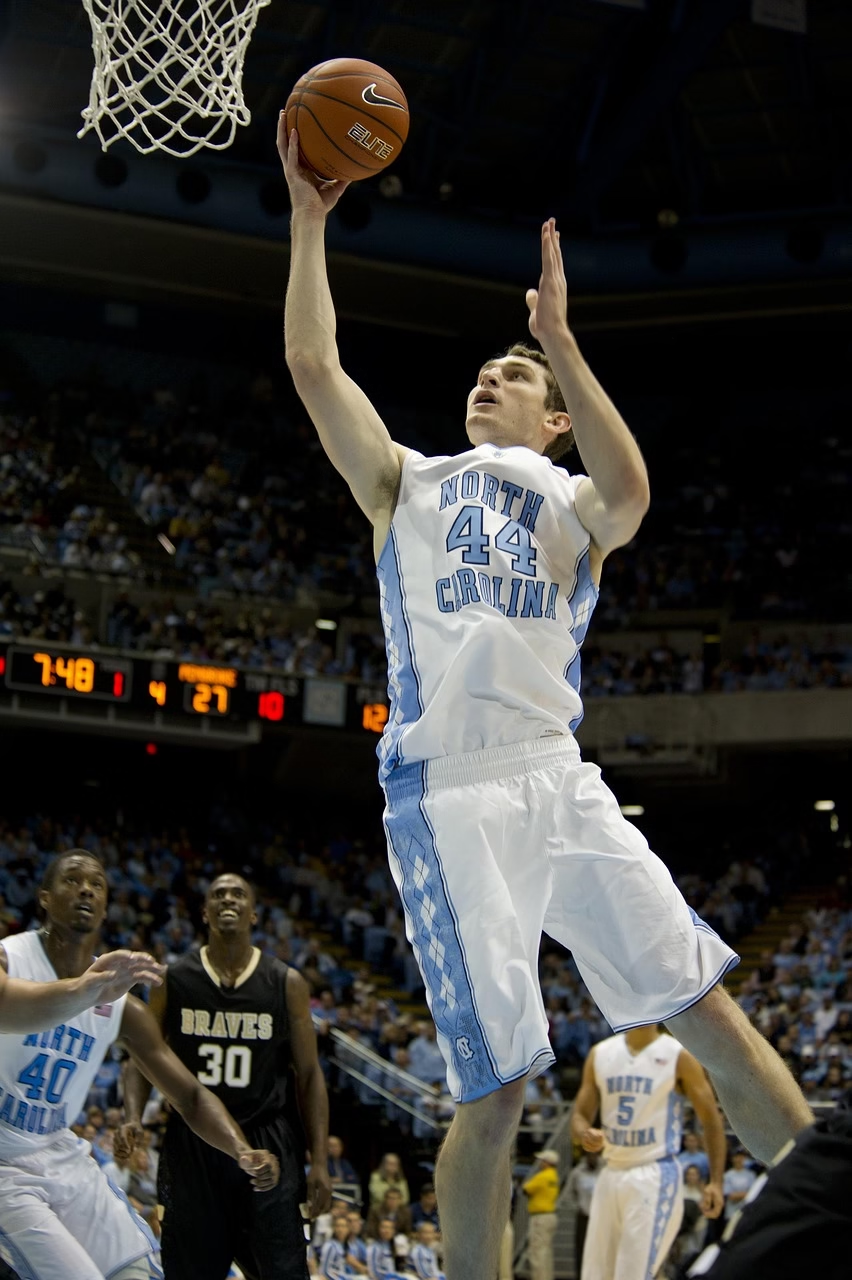
As the May 27, 11:59 p.m. ET deadline looms, 71 college basketball underclassmen face pivotal decisions regarding their 2026 NBA Draft declarations, poised to significantly reshape the landscape of the upcoming 2026–27 NCAA season across top conferences nationwide. These athletes, having “tested the waters” through the pre-draft process, must now choose between professional aspirations and returning to school, a choice increasingly influenced by lucrative Name, Image, and Likeness (NIL) opportunities.
The Evolving Landscape of Collegiate Decisions
The annual NBA Draft withdrawal deadline serves as a critical juncture for college basketball programs. This year, the number of early entrants has notably declined to 71, a significant drop from 106 a year prior and part of a steady downward trend since 2021. This shift is widely attributed to the evolving NIL environment, which has transformed returning to college from a fallback option into a highly attractive and financially viable path for many talented players. Events such as the NBA Draft Lottery and the NBA Combine have provided prospects with crucial feedback, informing their final decisions as they weigh their draft stock against another year of collegiate development and potential NIL earnings.
High Stakes for Top Programs and Prospects
The choices these players make in the coming days will have profound implications for team rosters and national title aspirations.
National Title Contenders Await Key Returns
Michigan, the reigning 2026 national champion, stands to gain immensely from the potential returns of stars like Mara and Morez Johnson Jr. Mara, the most highly touted prospect among those considering a return, significantly boosted his NBA stock during Michigan’s championship run. His unexpected return, alongside Johnson, who averaged 13.1 points and 7.8 rebounds as a sophomore, would solidify Michigan’s frontcourt with additions Moustapha Thiam and J.P. Estrella, positioning the Wolverines as strong contenders to defend their title.
Similarly, Florida’s aspirations for a national championship run, after a disappointing first-weekend exit in 2026, hinge on the decision of Chinyelu. His defensive presence would complement returning forwards Thomas Haugh and Alex Condon, reinforcing a team already ranked No. 1 in FOX Sports’ Casey Jacobsen’s Post-Portal Top 25.
Duke’s backcourt could become one of the nation’s most formidable if Blackwell, a top scoring guard from Wisconsin, commits for his senior year. Averaging 19.1 points per game last season, Blackwell’s addition alongside Cayden Boozer, Caleb Foster, and freshman Deron Rippey Jr. would give the Blue Devils unparalleled depth and scoring punch, providing Blackwell an opportunity to further develop his all-around game.
Conference Power Shifts and Emerging Stars
The SEC and Big Ten particularly await critical outcomes. At Arkansas, Thomas, an NBA first-round talent who averaged 15.6 points per game, could step into a featured role following the departures of D.J. Wagner and Darius Acuff Jr. His return, alongside freshmen Abdou Toure and Jordan Smith, would aim to build on the Razorbacks’ 2026 Sweet 16 run.
Vanderbilt’s outlook brightens considerably with the potential return of Tanner, who saw a dramatic improvement from 5.7 to 19.5 points per game last season. His junior year could see him emerge as one of the SEC’s elite guards, bolstering a backcourt already strengthened by transfers T.O. Barrett (Missouri) and Ace Glass (Washington State).
Michigan State’s ceiling for the 2026–27 season heavily relies on Fears, the Spartans’ primary offensive initiator and a first-team All-Big Ten selection who led the nation with 9.4 assists per game. His departure would leave a significant void, as the Spartans have yet to add guards through the transfer portal.
High-Impact Transfers and Undecided Talents
Beyond returning to their original schools, some players are testing both the NBA Draft and the transfer portal. Momcilovic, a 6-foot-8 forward from Iowa State who averaged 16.9 points and led the nation in three-point shooting at 48.8%, represents a significant prize. His unique skillset could elevate any team to national title contention, though his NIL demands may limit potential suitors.
Graves, a 6-foot-9 forward from Santa Clara, is another intriguing prospect. Despite coming off the bench and averaging 11.8 points and 6.5 rebounds, his shooting (41.3% from three) and size make him a coveted asset. If he returns to college, a jump to a Power 4 program for a starting role is highly probable.
At Stanford, Okorie, who led the ACC with 23.2 points per game as a freshman, could guide the Cardinal to an NCAA Tournament appearance if he withdraws from the draft. With a largely intact roster from a 20-13 season, his return would provide much-needed offensive firepower and leadership.
Forward-Looking Implications
The decisions made by these top prospects in the coming days will fundamentally sculpt the competitive landscape of the 2026–27 college basketball season. Their choices will dictate which teams enter the season as national title favorites, redefine conference pecking orders, and influence the recruitment strategies of programs across the country. The continued impact of NIL ensures that collegiate basketball remains an increasingly attractive and viable alternative to early draft entry for elite talent, fostering a dynamic environment where player retention can dramatically alter a team’s fortunes overnight. As the May 27 deadline approaches, all eyes will be on these athletes, whose individual choices will collectively determine the narrative of the season to come.