




Public Health Concerns Force Venue Change
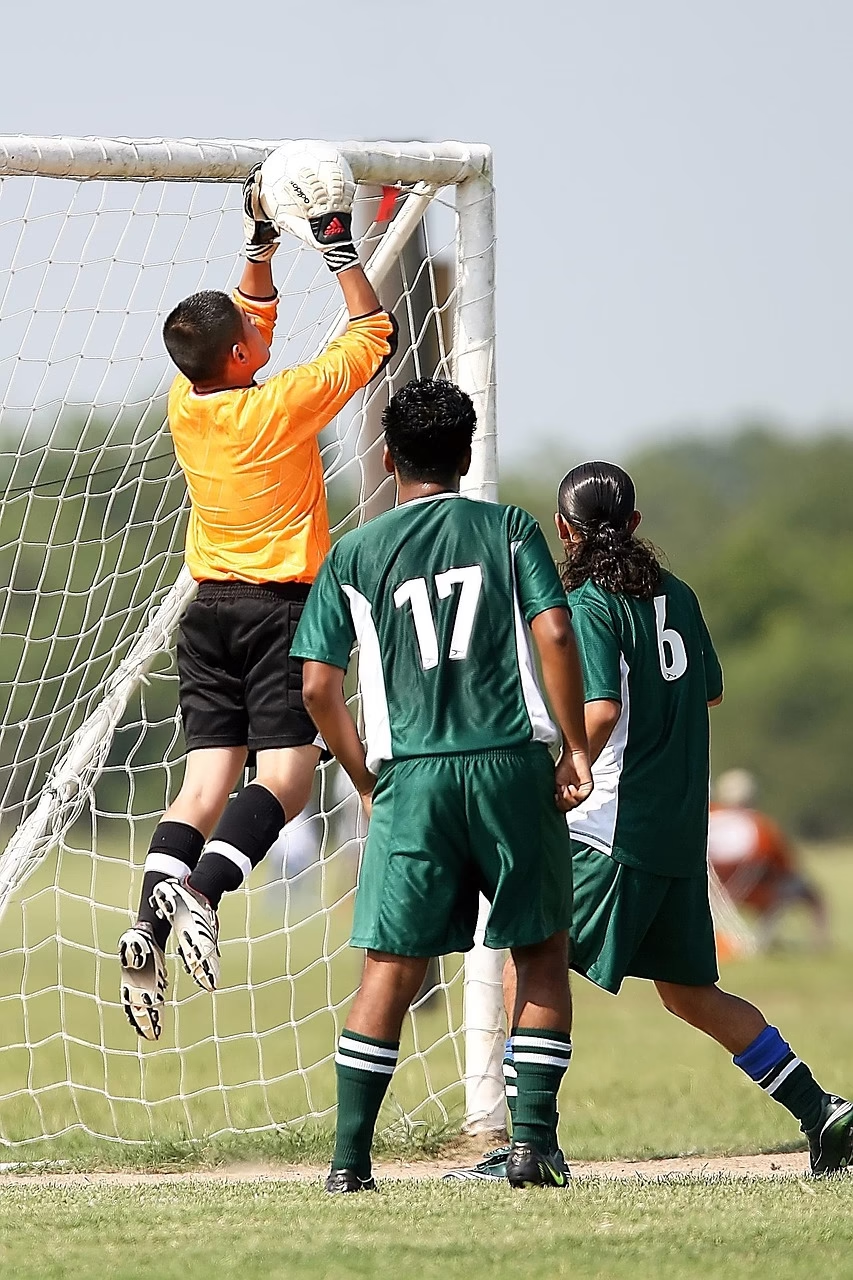
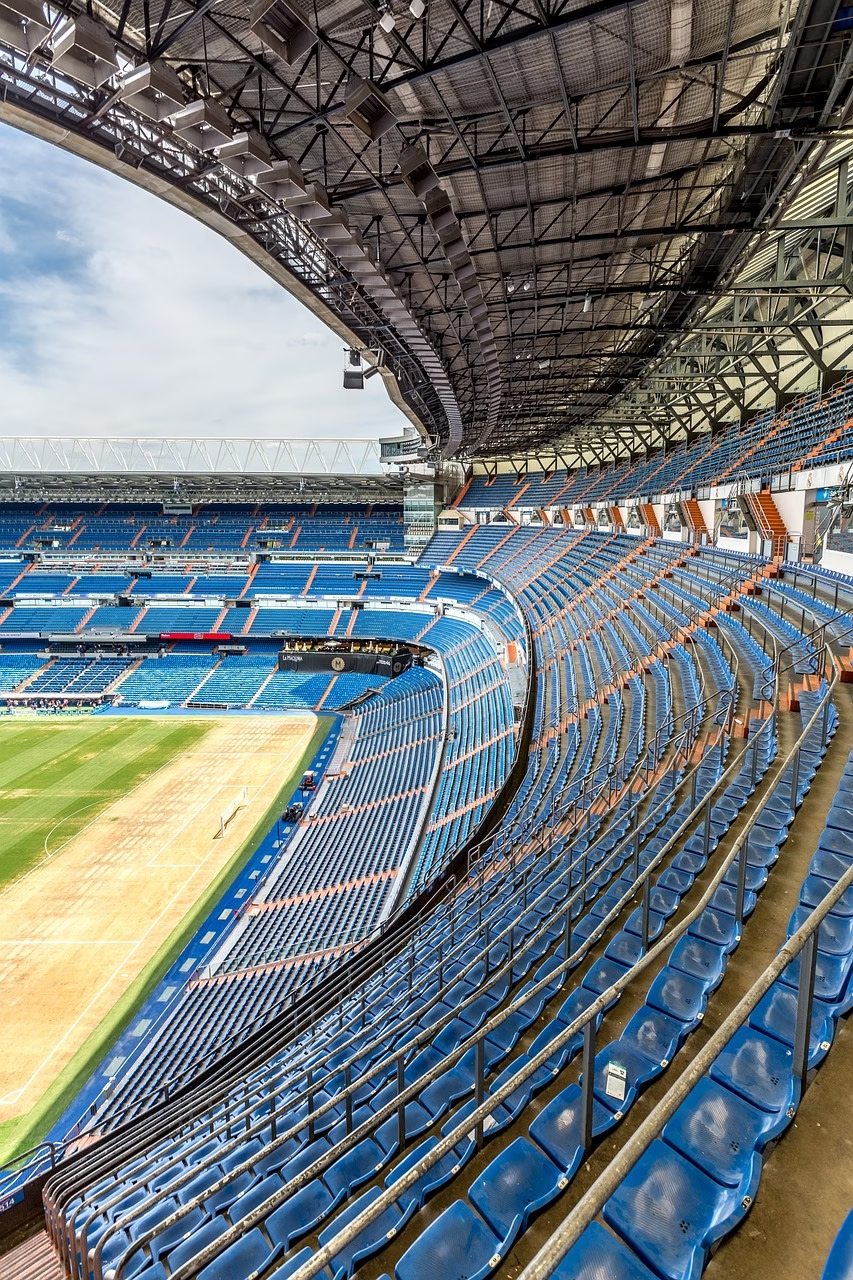
The Democratic Republic of Congo (DRC) national football team will play its final World Cup warm-up match against Chile behind closed doors this week, as health authorities move to mitigate risks associated with the ongoing Ebola outbreak in the central African nation. The decision, confirmed by tournament organizers and public health officials, mandates that no spectators will be permitted inside the stadium to prevent large public gatherings during the high-alert period.
The move comes as the DRC continues to battle a complex health crisis that has triggered international travel warnings and heightened surveillance measures. While the match remains on the schedule to ensure the team maintains its competitive readiness, the total exclusion of fans marks a significant shift in protocol for international sporting events held in the region.
Context and Regional Health Challenges
Ebola virus disease (EVD) remains a severe, often fatal illness, with the DRC frequently serving as a focal point for containment efforts due to its dense population centers and challenging geography. The World Health Organization (WHO) has consistently advised that controlling the spread of the virus requires strict adherence to hygiene protocols and the avoidance of large-scale public assemblies that could facilitate rapid transmission.
Sports events, which typically draw thousands of supporters into concentrated spaces, present a unique logistical challenge for local authorities. By transitioning to a closed-door format, officials aim to balance the necessity of athletic preparation with the paramount requirement of public safety, ensuring that players and staff can operate within a controlled, sterilized environment.
Operational Impact on International Football
The decision to bar fans from the Chile fixture highlights the broader intersection of global sports and public health crises. For the DRC national squad, the lack of a home-crowd advantage represents a tactical disadvantage, as players will miss the emotional and psychological boost provided by their supporters during the critical final phase of their training camp.
Football governing bodies have increasingly relied on data-driven risk assessments to determine whether fixtures should proceed under normal conditions or with restrictions. According to recent health data from the Ministry of Public Health, the current containment strategy relies heavily on contact tracing and the limitation of mass gatherings in affected provinces. The exclusion of fans is a direct application of these containment strategies, reflecting a broader trend where public health mandates take precedence over traditional sporting customs.
Industry Implications and Future Outlook
This development serves as a sobering reminder of the vulnerability of the global sports calendar to regional health emergencies. For the broadcasting and ticketing industries, the shift to a closed-door match necessitates immediate logistical adjustments, including the refunding of ticket sales and the reconfiguration of media access protocols to ensure that journalists and broadcast crews operate within strict safety bubbles.
Industry analysts suggest that this incident will likely influence future host-city contracts, which may now include more robust “force majeure” clauses related to infectious diseases. As the football community looks toward upcoming tournaments, the focus will remain on the efficacy of these protective measures and whether similar restrictions will be required for other regional matches. Stakeholders will be watching closely to see if the DRC team’s performance suffers under these isolated conditions and whether other nations adopt similar preemptive measures in the coming months.