



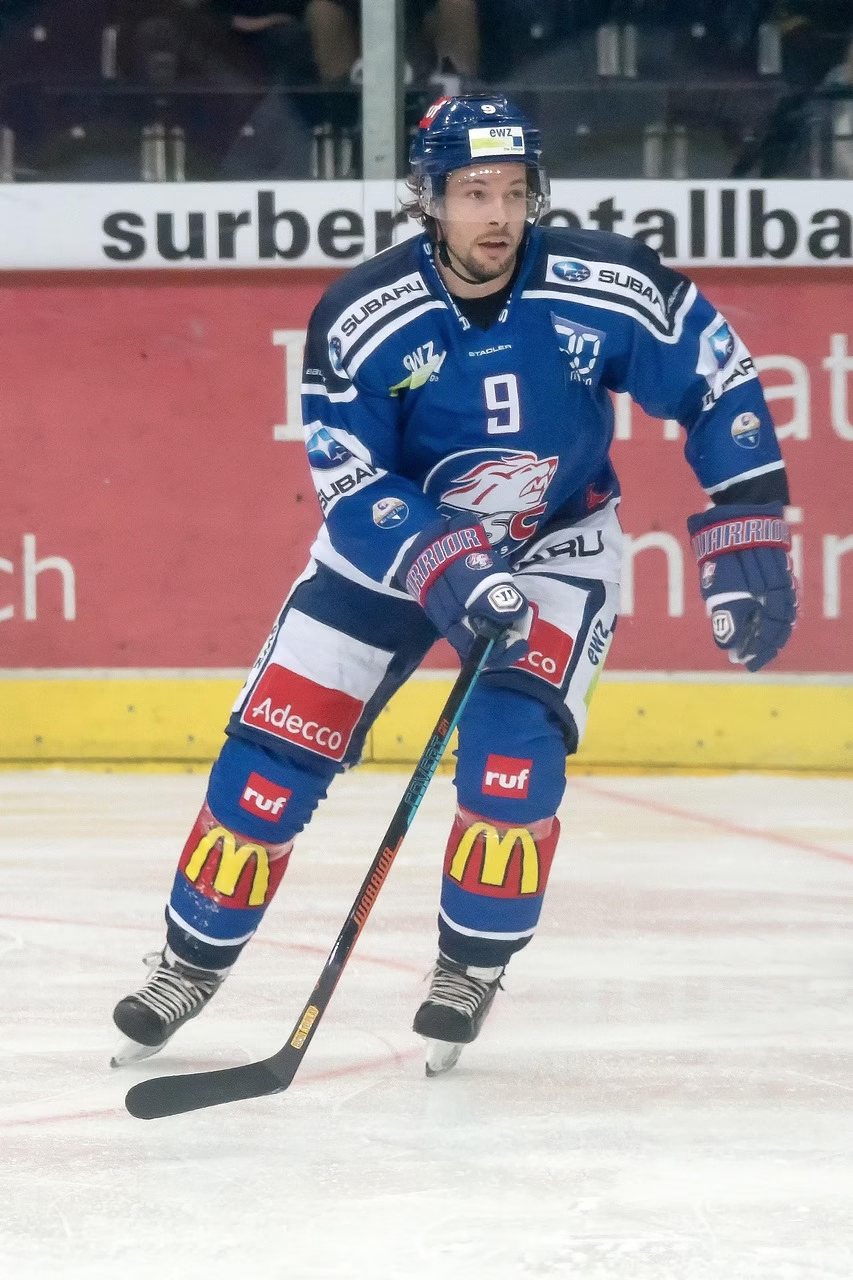
Anaheim Ducks forward Troy Terry will undergo surgery for a chronic hip impingement, the team announced Thursday, casting significant doubt on his availability for the start of the next NHL season and presenting a major challenge for the struggling franchise as it navigates its roster future.
Understanding Hip Impingement and Its Impact
Hip impingement, clinically known as femoroacetabular impingement (FAI), occurs when the bones of the hip joint are abnormally shaped, causing them to rub against each other during movement. This friction can damage the articular cartilage or tear the labrum, a ring of cartilage that lines the hip socket.
FAI is particularly prevalent in athletes involved in sports requiring repetitive hip flexion and rotation, such as hockey, soccer, and ballet. Symptoms typically include groin pain, stiffness, and a reduced range of motion, which can severely hinder an athlete’s performance.
Surgical intervention, often arthroscopic, aims to reshape the bones and repair any damaged soft tissues, alleviating impingement and restoring normal hip mechanics. Recovery periods can vary widely but often involve several months of rehabilitation.
Terry’s Injury and the Ducks’ Challenge
The revelation of Terry’s chronic condition comes after a season where the winger continued to be a key offensive contributor for the Ducks, despite the team’s overall struggles. His upcoming procedure signals a significant setback for both the player and the organization.
Terry, 26, emerged as a top-line talent for Anaheim, known for his offensive skill and playmaking ability. His absence, even for a portion of the upcoming season, places additional pressure on the Ducks’ forward depth and their ongoing rebuilding efforts.
The team did not provide a specific return timetable, underscoring the individualized nature of hip surgery recovery. This uncertainty forces the Ducks to consider contingency plans for their top-six forward group as they head into the offseason.
Expert Perspectives on Athlete Recovery
“Hip impingement surgery in professional athletes is a common but complex procedure,” explains Dr. Emily Chen, a sports medicine specialist at the Institute for Advanced Orthopedics. “The goal is to restore full function, but the recovery process demands patience and meticulous rehabilitation to prevent re-injury and ensure the athlete can return to their prior level of performance.”
Dr. Chen notes that while many athletes successfully return to play, the timeline often extends beyond initial estimates. “We typically look at a four-to-six-month recovery period as a baseline, but for high-impact sports like hockey, ensuring full strength and mobility before clearing a player is paramount.”
Data from a 2022 study published in the Journal of Orthopaedic & Sports Physical Therapy indicates that approximately 85% of professional athletes undergoing arthroscopic FAI surgery return to sport, with an average return-to-play time ranging from 5.5 to 7 months. However, a small percentage may experience persistent symptoms or require further intervention.
Implications for the Anaheim Ducks
Troy Terry’s surgery creates immediate strategic challenges for the Anaheim Ducks. The team, currently undergoing a significant rebuild, will likely need to adjust its offseason plans, particularly regarding free agency and the upcoming NHL Entry Draft.
General Manager Pat Verbeek will face critical decisions on bolstering the forward corps to mitigate Terry’s potential absence. This could involve pursuing veteran free agents who can provide offensive stability or prioritizing a high-impact forward in the draft.
For Terry himself, the surgery represents a critical juncture in his career. A successful and timely recovery is essential for him to maintain his trajectory as a top-tier NHL winger and solidify his long-term role with the Ducks, especially as he enters his prime years.
The situation also highlights the broader trend of managing chronic injuries in professional sports. Teams are increasingly investing in sophisticated sports science and medical staff to monitor player health and minimize recovery times, yet complex orthopedic issues remain a significant hurdle.
As the Ducks look ahead to a pivotal offseason, all eyes will be on Terry’s rehabilitation progress and how the organization strategically addresses his potential absence to build a more competitive roster for the future.