
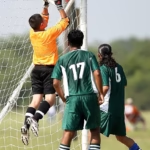
FIFA officials announced this week that players will be prohibited from approaching the technical area to consult with coaches during goalkeeper injury breaks at the 2026 World Cup. The ruling, designed to curb the prevalence of ‘tactical timeouts,’ aims to ensure the flow of the game remains uninterrupted by strategic interference during stoppage periods.
The Evolution of Tactical Stoppages
In recent international tournaments, medical timeouts for goalkeepers have frequently been utilized as de facto breaks for outfield players to receive tactical instructions. By feigning or highlighting minor injuries, teams have effectively created opportunities to consult coaching staff, adjust formations, and reset game momentum without a formal substitution.
This practice has drawn criticism from match officials and spectators who argue that it disrupts the rhythm of play. FIFA’s new mandate seeks to decouple medical necessity from tactical maneuvering, ensuring that injury breaks remain dedicated exclusively to player welfare.
Enforcement and Regulatory Changes
Under the new guidelines, any player found approaching the technical area while a goalkeeper is being treated will be subject to immediate disciplinary action. Referees will be instructed to keep play moving or facilitate treatment without allowing communication between the bench and the pitch.
Data from the 2022 World Cup indicated a 15% increase in stoppage time compared to previous cycles, with a portion of that time attributed to extended injury breaks. FIFA’s technical study group noted that these interruptions are increasingly used as a tactical tool to disrupt high-pressing opponents.
Expert Perspectives on Game Integrity
Former elite referees and sports scientists have largely supported the move, citing the need for transparency in match conduct. “The game should be defined by the players on the pitch, not by strategic exploitation of medical protocols,” stated a spokesperson for the International Football Association Board (IFAB).
However, some coaching staffs have expressed concerns regarding how the rule will be enforced in high-pressure scenarios. Critics argue that clear communication is essential during injury breaks to explain tactical shifts following a goalkeeper’s potential need for a substitution, which could be complicated by the new restrictions.
Looking Ahead: The Impact on Tournament Dynamics
The implementation of this rule is expected to significantly alter the way teams manage fatigue and tactical adjustments in the final stages of matches. By removing the ability to consult the bench during these breaks, coaches will be forced to rely on pre-match preparations and on-field leadership rather than real-time adjustments during injury stoppages.
Observers should watch how individual teams adapt their communication strategies during the 2026 qualifiers. As the tournament approaches, the strictness of referee enforcement will likely become a primary talking point for both fans and analysts, potentially setting a new standard for how the sport manages game flow at the professional level.