






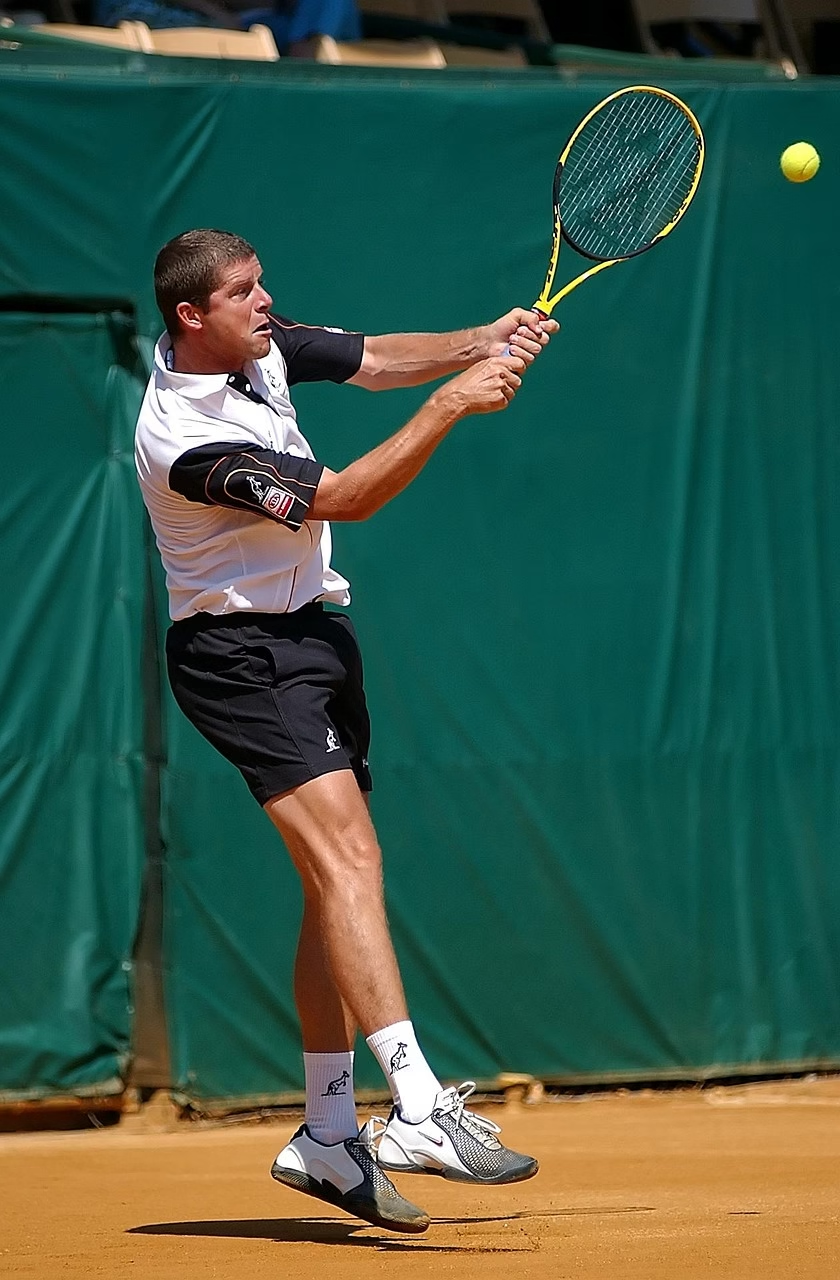
A Changing of the Guard in Paris
Rising tennis star Joao Fonseca sent shockwaves through the sporting world on Friday at Roland Garros, eliminating 24-time Grand Slam champion Novak Djokovic in a dramatic five-set, third-round encounter. The match, which lasted over four hours in the Parisian heat, saw the young Brazilian overcome a two-set deficit to seal a historic victory, marking one of the most significant upsets in recent French Open history.
The defeat marks a premature exit for the Serbian legend, who was pursuing a record-extending 25th major title. For Fonseca, the win represents a career-defining moment, propelling the young athlete into the spotlight as the next generation of talent continues to challenge the established dominance of the sport’s “Big Three” era.
The Context of a Declining Era
Novak Djokovic, who has long served as the benchmark for physical and mental endurance in tennis, has faced increasing scrutiny regarding his form throughout the 2026 season. Following a difficult start to the year and mounting injury concerns, analysts have pointed to a noticeable shift in the veteran’s ability to dominate matches against younger, more aggressive opponents.
Roland Garros has historically been a stronghold for Djokovic, yet this loss follows a trend of early-round vulnerabilities observed in recent major tournaments. The departure of both Djokovic and Jannik Sinner in the same week has left the draw wide open, signaling a potential power vacuum at the top of the men’s game.
Tactical Resilience and Physicality
The match began with Djokovic dictating play, utilizing his signature baseline precision to dismantle Fonseca’s game plan early on. By the middle of the second set, Djokovic appeared to be cruising toward a routine victory, leaving many spectators to assume the outcome was a formality.
However, the momentum shifted dramatically in the third set as Fonseca began to take higher risks on his serve and forehand. “He was destroying me early on,” Fonseca noted in his post-match press conference. “By the fifth set, it wasn’t about tactics anymore; it was all heart and survival.”
Statistical data from the match highlights the changing dynamic, with Fonseca’s unforced errors dropping significantly while his winners count surged in the final two sets. The Brazilian’s ability to maintain high intensity under pressure ultimately forced the veteran into uncharacteristic errors during the deciding games.
Industry Implications and Future Outlook
The fallout from this match extends far beyond a single tournament result, as industry experts suggest this may be the clearest indicator yet that the competitive landscape of professional tennis is fundamentally shifting. With the younger cohort now routinely pushing veterans to their physical limits, the ability to recover between matches and maintain peak performance is becoming the primary differentiator.
For fans and stakeholders, the focus now turns to how the remaining field will capitalize on the absence of the top seeds. As the tournament moves into the second week, observers will be watching closely to see if Fonseca can sustain his high level of play or if the emotional toll of such an intense victory will impact his subsequent performance.
The coming months will be critical for Djokovic as he evaluates his schedule and recovery strategies ahead of the grass-court season. Meanwhile, the tour is bracing for a new era where the hierarchy is no longer guaranteed, and every match is viewed as a high-stakes battle between the established legends and an increasingly fearless youth movement.


