




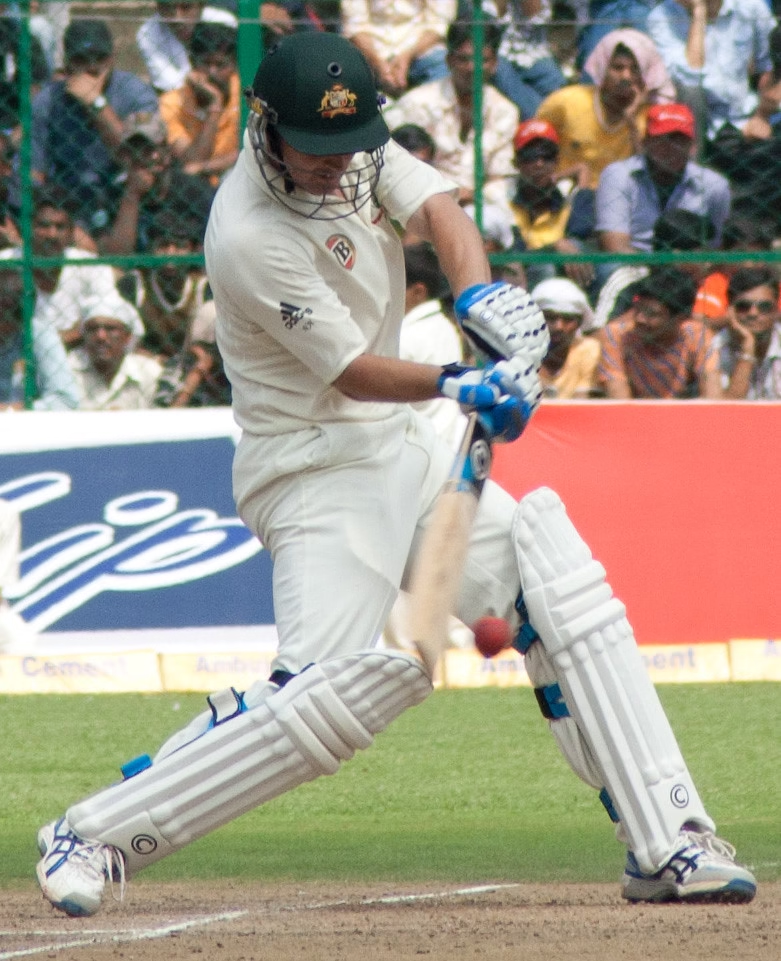
KL Rahul and Sai Sudharsan anchored a dominant performance for India on the opening day of the one-off Test match against Afghanistan, steering the hosts to a commanding position through disciplined batting and technical precision. The duo navigated a challenging surface to build a substantial partnership, effectively silencing concerns regarding their transition from the high-octane environment of T20 cricket to the patient requirements of the longest format.
Adapting to the Test Match Tempo
The transition from the shortest format of the game to Test cricket frequently poses a significant challenge for modern batsmen accustomed to aggressive scoring rates. KL Rahul, often scrutinized for his approach in T20 leagues, demonstrated a remarkable shift in temperament, prioritizing defensive solidity and shot selection over early-inning volatility.
Sai Sudharsan, meanwhile, validated the team management’s decision to provide him with an extended opportunity at the international level. His composed 81 runs showcased a maturity that belied his experience, as he balanced cautious play with timely aggression against the Afghan bowling attack.
Context of the Match Dynamics
This one-off Test serves as a critical evaluation point for the Indian middle order as they prepare for a demanding international calendar. With several senior players rotated or rested, the management has utilized this match to test the depth of the squad and the adaptability of their white-ball specialists in red-ball conditions.
Afghanistan entered the match aiming to capitalize on early movement offered by a fresh pitch. However, the inability of their pace battery to break the Rahul-Sudharsan partnership during the middle session allowed India to dictate terms for the remainder of the day.
Expert Analysis and Performance Metrics
Statistical analysis of the day’s play highlights the efficiency of the Indian top order in rotating the strike. Rahul’s ability to leave the ball outside the off-stump served as a masterclass in patience, effectively neutralizing the threat posed by the Afghan seamers who sought to exploit the corridor of uncertainty.
Cricket analysts noted that the partnership relied on minimizing dot balls while maintaining a high defensive standard. By keeping the scoreboard ticking, the pair ensured that the Afghan bowlers were unable to settle into a rhythm, forcing the opposition captain to rotate his options frequently.
Implications for Future Selection
The success of Rahul and Sudharsan provides the Indian selection committee with a favorable dilemma ahead of upcoming Test series. Demonstrating the capacity to adjust to the rigors of Test cricket strengthens the argument for maintaining continuity in the batting lineup rather than relying on frequent personnel changes.
Observers will now watch how the Indian bowling unit responds to the challenge of bowling on a pitch that has flattened out, with the second day likely to determine whether India can push for a result-oriented victory. The focus will remain on whether the middle order can consolidate the platform built by these two batsmen or if the Afghan attack can mount a resistance through early breakthroughs.