




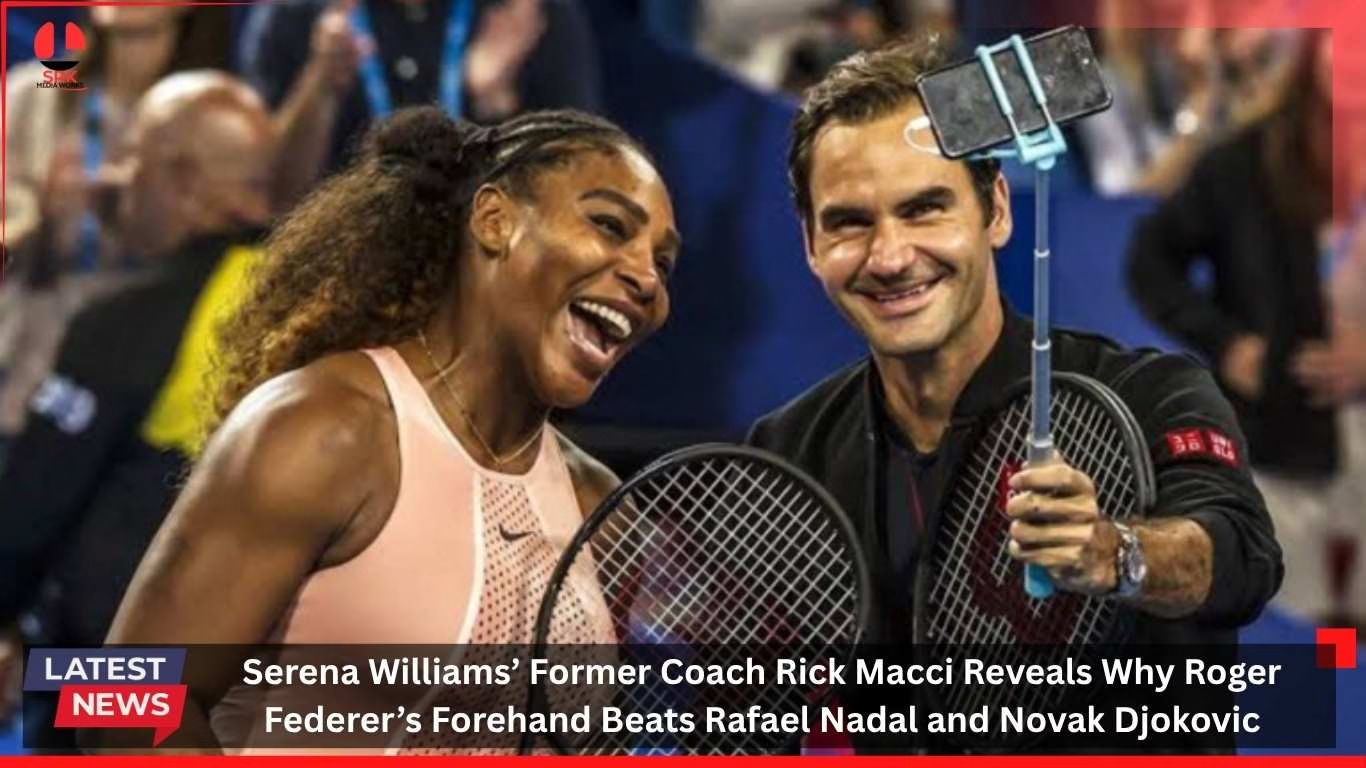
Legendary tennis coach Rick Macci, who trained Serena Williams, has declared Roger Federer’s forehand the greatest in tennis history, explaining why it surpasses Rafael Nadal’s heavy topspin and Novak Djokovic’s precision. Macci emphasized Federer’s unique grip, timing, and ability to rush opponents, making his forehand more uncomfortable to face than Nadal or Djokovic.
Rick Macci’s Analysis
Rick Macci, known for shaping champions like Serena and Venus Williams, broke down Federer’s technique in detail:
- Hybrid Grip: Federer used a grip between eastern and semi-western, allowing versatility.
- Baseline Play: He took the ball early, right off the bounce, forcing opponents to react faster.
- Opponent Feedback: Players who faced Federer, Nadal, and Djokovic admitted they felt more “rushed” against Federer’s forehand.
- Comparison with Nadal: Nadal’s topspin is brutal, especially on clay, but Federer’s forehand applied a different kind of pressure.
- Djokovic’s Backhand: Macci also crowned Djokovic’s backhand as the best ever, calling him the “Serbian sniper” for his flawless mechanics.
Federer’s Career Achievements
Roger Federer’s numbers already place him among the greatest:
| Category | Statistic |
|---|---|
| ATP Titles | 103 (2nd all-time) |
| Grand Slam Titles | 20 |
| Weeks at World No. 1 | 310 |
| Olympic Medals | Gold (2008 doubles), Silver (2012 singles) |
These achievements, combined with his artistry, make Federer’s forehand a defining weapon in tennis history.
Comparative Forehand and Backhand Strengths
| Player | Forehand Strengths | Backhand Strengths |
|---|---|---|
| Roger Federer | Hybrid grip, early timing, rushes opponents | Solid but overshadowed by forehand |
| Rafael Nadal | Heavy topspin, punishes backhands on clay | Defensive resilience, less aggressive |
| Novak Djokovic | Consistent, precise, adaptable | Widely regarded as the best backhand ever |
This comparison shows why Macci singled out Federer’s forehand and Djokovic’s backhand as unmatched.
Why Federer’s Forehand Stands Out
- Speed and Timing: Federer’s ability to take the ball early disrupted rhythm.
- Versatility: Effective on all surfaces, unlike Nadal’s clay dominance.
- Psychological Pressure: Opponents felt rushed, reducing their shot quality.
- Longevity: Federer maintained forehand effectiveness across two decades.
Fan and Expert Reactions
Fans celebrated Macci’s comments, noting that Federer’s forehand was often described as “liquid whip.” Analysts agreed that while Nadal and Djokovic had their strengths, Federer’s forehand was aesthetically and technically unique.
Conclusion
Rick Macci’s insights reaffirm Federer’s place in tennis history. His forehand, combining artistry and effectiveness, remains a benchmark for players worldwide. Nadal’s topspin and Djokovic’s backhand are legendary, but Federer’s forehand continues to be remembered as the shot that redefined modern tennis.
Disclaimer
This article is a sports news analysis created for informational purposes only. It reflects reported interviews and expert opinions. Official player statistics and rankings are subject to updates by ATP and governing bodies.