










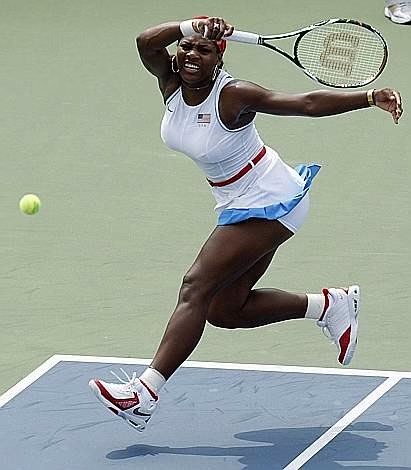
Serena Williams made a triumphant return to professional tennis at the Queen’s Club in London this week, securing a hard-fought victory in her first competitive match in 1,375 days. The 23-time Grand Slam champion, whose long-awaited comeback captivated the sports world, displayed flashes of her signature power and precision throughout the contest.
A Long-Awaited Return to the Court
The hiatus, spanning nearly four years, marked the longest period of inactivity in Williams’ storied career. Fans and analysts alike questioned whether the veteran athlete could regain her competitive edge after such a prolonged absence from the professional circuit.
Williams entered the grass-court tournament with tempered expectations, famously self-assessing her performance as a “C-minus” during her post-match press conference. Despite her own critique, the victory serves as a significant milestone in her return to elite-level competition.
Contextualizing the Comeback
Tennis history is replete with legendary players attempting to navigate the challenges of returning after extended breaks. Physical conditioning and match rhythm remain the primary obstacles for any athlete stepping away from the game at the highest level.
The Queen’s Club event provided an ideal setting for this return, offering a traditional grass-court environment that favors Williams’ aggressive style of play. Organizers noted a marked increase in ticket demand leading up to the match, underscoring the enduring global appeal of the tennis icon.
Analyzing the Performance
Throughout the match, Williams relied on her trademark serve, which yielded several crucial aces during pivotal moments. While her movement appeared slightly restricted compared to her prime years, her ability to dictate points from the baseline remained fundamentally intact.
Data analytics from the match indicated that Williams maintained a high first-serve percentage throughout the opening set. This consistency allowed her to neutralize her opponent’s return games and maintain pressure throughout the duration of the play.
Expert Perspectives
Tennis analysts highlighted the psychological fortitude required to step back onto the court after such an extended layoff. Former professionals noted that the “rust” typically associated with long breaks often manifests in decision-making under pressure, yet Williams managed those moments effectively.
“The sheer muscle memory of a champion is difficult to erase,” said one tennis commentator. “Even without peak physical conditioning, the tactical awareness Williams possesses gives her a distinct advantage against younger, less experienced opponents.”
Industry and Future Implications
For the broader tennis industry, Williams’ return serves as a major narrative boost, drawing renewed interest to the lead-up events for the major grass-court season. Her participation influences tournament scheduling, broadcast interest, and sponsorship engagement across the sport.
Observers are now focused on how Williams will manage her physical recovery between matches and whether she will commit to a full schedule for the remainder of the season. Success at this level will likely dictate her seeding and entry into upcoming prestigious tournaments, making her future performance a critical barometer for her competitive longevity.


