




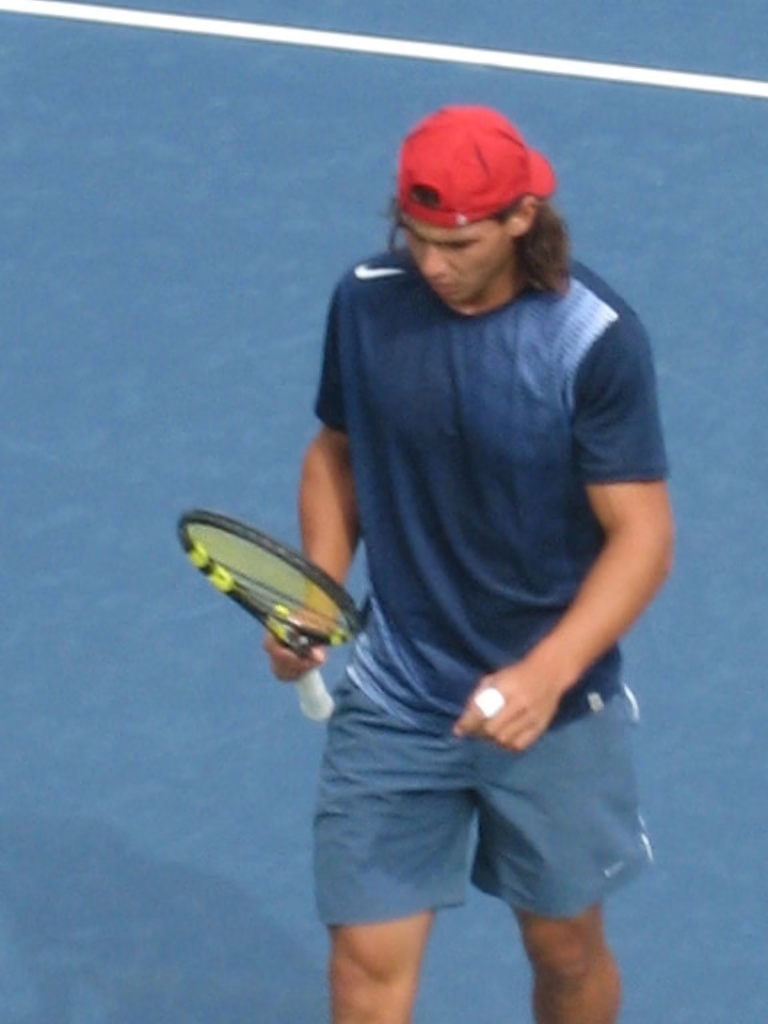
Netflix has officially released a four-part documentary series titled ‘Rafa,’ offering an intimate retrospective on the storied career of tennis legend Rafael Nadal. The production, which premiered globally this month, chronicles the Spaniard’s transformation from a teenage prodigy on the clay courts of Mallorca to a 22-time Grand Slam champion, providing an unprecedented look at his physical struggles and mental fortitude.
The Trajectory of an Icon
Rafael Nadal’s career has been defined by a rare combination of raw intensity and tactical discipline. Since turning professional in 2001, the left-handed baseliner has dominated the ATP tour, particularly at the French Open, where he secured a record 14 titles.
The documentary navigates the timeline of his ascension, highlighting the 2005 breakthrough that established him as a global force. It also examines the relentless physical toll that a high-intensity playing style has exacted on his body over two decades.
A Study in Resilience
Beyond the trophy count, the series focuses heavily on the theme of recovery. Throughout his career, Nadal has faced recurring foot, knee, and abdominal injuries that frequently sidelined him during peak seasons.
The narrative arc emphasizes his ability to return to the pinnacle of the sport after significant layoffs. By utilizing archival footage and interviews with long-time coach Toni Nadal, the series provides context on the psychological mechanisms that allowed him to maintain his competitive edge despite chronic pain.
Expert Perspectives and Industry Impact
Sports analysts suggest that the documentary arrives at a pivotal moment for tennis. With the recent retirements of contemporaries like Roger Federer and Andy Murray, the sport is transitioning into a new era.
Data from the Association of Tennis Professionals (ATP) highlights that Nadal’s career winning percentage on clay remains the highest in the history of the Open Era. Experts point to this consistency as the primary factor in his cultural relevance, noting that his influence extends well beyond the lines of the court.
The series also features commentary from medical professionals and fellow athletes who discuss the evolution of sports medicine in tennis. These segments underscore how modern recovery techniques have extended the careers of legends like Nadal, yet they also highlight the inevitable limitations of the human body.
Looking Toward the Future
The industry is now monitoring how Nadal’s post-retirement life will influence the sport’s commercial landscape. As he transitions away from professional competition, the focus shifts to the legacy of his tennis academy and his role in shaping the next generation of players.
Observers are watching closely to see if his departure will lead to a shift in tactical trends on the tour. The documentary serves as both a retrospective for long-time fans and a masterclass for aspiring athletes, signaling that while his competitive chapter may be closing, his impact on the technical development of tennis will persist for years to come.