







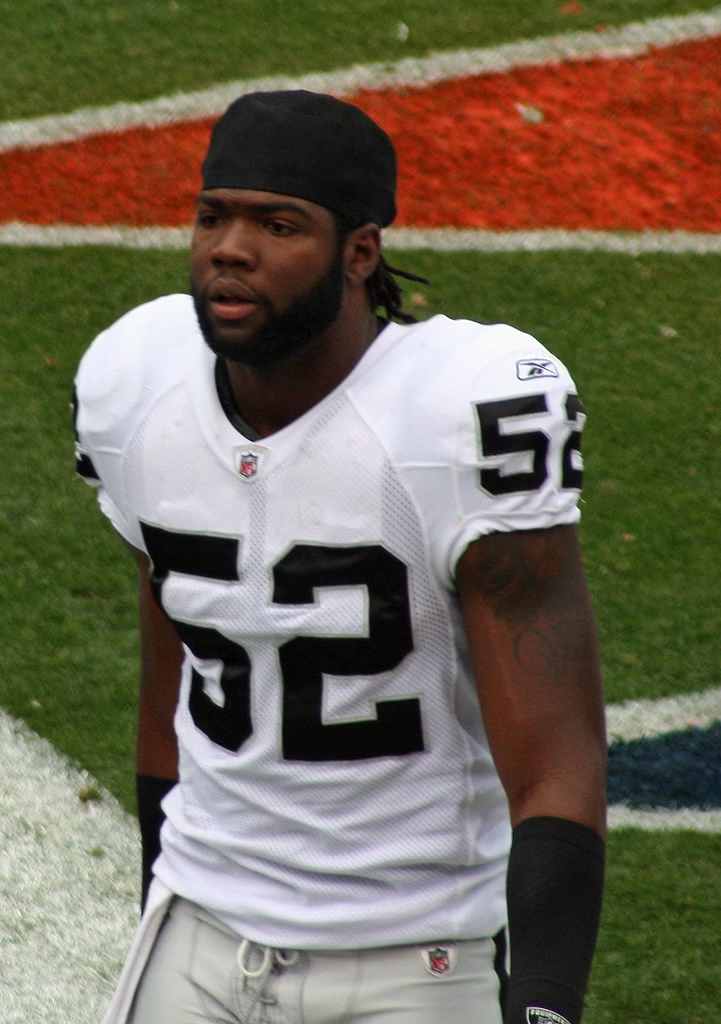
University of Southern California freshman linebacker Talanoa Ili has filed a legal challenge against the landmark House v. NCAA settlement, marking the first significant attempt to dismantle the proposed framework for Name, Image, and Likeness (NIL) compensation in college athletics. Filed this week in the Northern District of California, the lawsuit seeks to prevent the implementation of the agreement, which would fundamentally alter how student-athletes are compensated and how the NCAA operates.
The Context of the House Settlement
The House v. NCAA settlement was intended to resolve three major antitrust cases by establishing a $2.7 billion fund to compensate former athletes and creating a new revenue-sharing model. This model would allow schools to distribute millions of dollars annually directly to athletes, effectively ending the amateurism era that defined collegiate sports for decades.
However, the settlement requires court approval and includes strict conditions that would limit the ability of future athletes to pursue certain antitrust claims. Critics of the deal argue that the agreement forces athletes into a restrictive system that maintains NCAA control over the marketplace.
The Basis of the Legal Challenge
Ili’s lawsuit contends that the settlement agreement is fundamentally flawed because it would impose severe limitations on NIL rights for future generations of college athletes. By accepting the terms, athletes would essentially waive their rights to challenge future NCAA regulations regarding compensation, creating a restrictive environment that could stifle market growth.
Legal analysts note that Ili’s standing as a current freshman provides a unique perspective in the litigation. Unlike retired players who are seeking back-pay, Ili’s career trajectory is directly impacted by the long-term structural changes the settlement proposes to codify.
Expert Perspectives and Industry Impact
Legal experts suggest that while the settlement has broad support from university conferences, it remains vulnerable to challenges regarding its impact on labor rights. “This lawsuit highlights the tension between institutional stability and the individual rights of athletes,” said sports law analyst Marcus Thorne. “If the court finds that the settlement improperly restricts future commerce, the entire framework could be sent back to the drawing board.”
Data from the National College Players Association suggests that the proposed settlement could leave billions of dollars in potential revenue on the table for athletes over the next decade. By limiting how third-party collectives can interact with players, the agreement may inadvertently suppress the market value of top-tier talent.
Implications for Collegiate Athletics
For the broader industry, this legal challenge introduces significant uncertainty regarding the timeline for revenue sharing. Universities and athletic departments were preparing to integrate the new financial structures by the start of the next fiscal year, but the lawsuit could trigger lengthy discovery processes and delays.
The outcome of this case will likely determine whether the NCAA can successfully transition to a model that integrates professionalized compensation without fully relinquishing regulatory control. Industry observers are now monitoring the Northern District of California for further filings, as other athletes may join the suit to amplify the challenge against the current settlement structure.
Stakeholders should watch for the court’s response to the motion for intervention, which will signal whether the judiciary is willing to reopen negotiations on the settlement terms. Should the court allow the case to proceed, the NCAA may be forced to choose between further increasing its financial concessions or risking a prolonged legal battle that could threaten the viability of the entire collegiate sports model.