
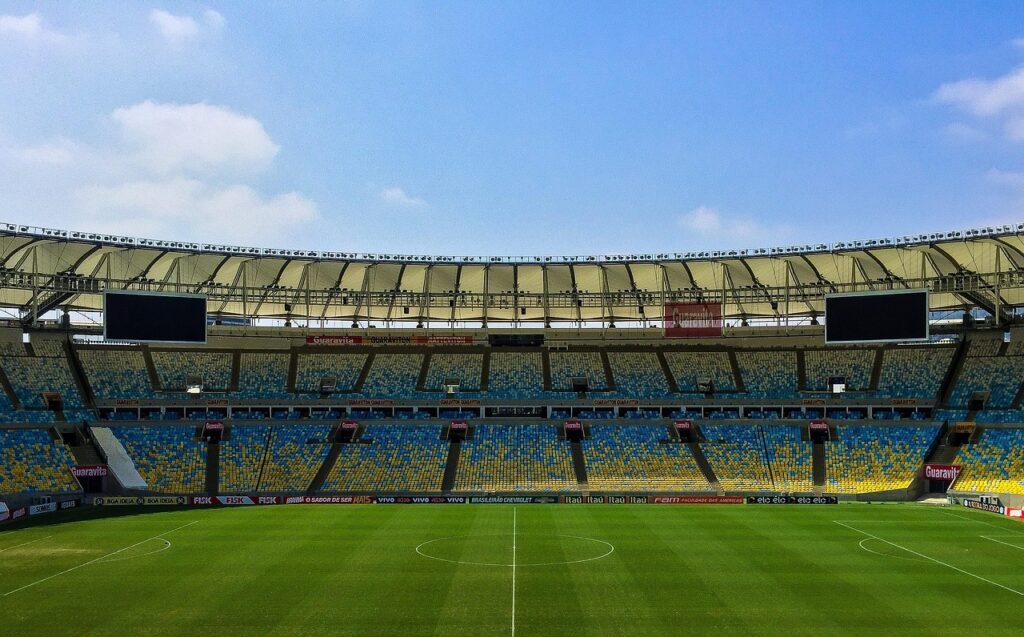

Slovenian referee Slavko Vincic will officiate the FIFA World Cup final between Argentina and Spain this Sunday, taking charge of the biggest match in international football. FIFA’s refereeing committee confirmed the appointment on Wednesday, placing the 44-year-old UEFA elite official at the center of the highly anticipated clash at the tournament’s flagship stadium. Vincic’s selection comes as both nations prepare for a tactical and physical battle to claim the sport’s ultimate prize.
A Veteran of High-Stakes Football
Vincic brings a wealth of elite refereeing experience to Sunday’s final, having established himself as one of Europe’s most reliable officials. The Slovenian referee recently took charge of the 2024 UEFA Champions League final at Wembley, demonstrating his ability to manage elite players and high-pressure environments. His international career spans over a decade, during which he has navigated highly volatile matches in both European and global tournaments.
FIFA’s decision to appoint Vincic reflects their preference for referees who permit physical play while maintaining strict control over player conduct. The governing body analyzed several candidates before finalizing the Slovenian team, which includes assistants Tomaz Klancnik and Andraz Kovacic. This cohesive officiating unit has worked together throughout the tournament, delivering consistent performances that earned them the final assignment.
Previous Clashes with Argentina and Spain
The appointment carries significant historical weight, as Vincic has previously crossed paths with both finalists in controversial and high-profile fixtures. For Argentina, Vincic is a familiar face from their turbulent 2022 World Cup campaign in Qatar, where he officiated their shocking 2-1 opening-match defeat to Saudi Arabia. During that fixture, Vincic and his VAR team disallowed three Argentine goals for offside, testing the patience of the South American giants early in their tournament run.
Spain also shares a recent history with the Slovenian official, most notably during their successful UEFA Euro 2024 campaign. Vincic officiated Spain’s high-stakes semi-final victory over France, a match praised for its fluid play and minimal refereeing controversy. Spanish players and coaching staff are familiar with his officiating style, which generally favors letting the game flow unless safety or sporting integrity is compromised.
In club football, Vincic has also refereed both Spanish and Argentine players in the UEFA Champions League, building individual rapports that could prove crucial on Sunday. His ability to communicate in multiple languages, including English and basic Spanish, allows him to defuse tense situations directly on the pitch. This linguistic versatility has often been cited by FIFA observers as a key reason for his rapid rise through the international refereeing ranks.
Analyzing the Officiating Style
Data from Vincic’s recent international fixtures reveals a referee who is conservative with red cards but firm with yellow cards for tactical fouls. According to UEFA refereeing statistics, Vincic averages 4.1 yellow cards per match and has one of the lowest fouls-to-tackle ratios among elite European referees. This statistical profile suggests he will allow a physical contest, a factor that could influence how both midfields approach the match.
Former FIFA referee Eduardo Iturralde Gonzalez noted that Vincic’s calm demeanor is his greatest asset in high-pressure environments. “Vincic does not seek the spotlight, which is exactly what FIFA wants for a World Cup final,” Gonzalez said in a recent tactical analysis. “He relies heavily on verbal warnings before resorting to his pockets, but he will not tolerate dissent from team captains or bench staff.”
Tactical Implications for the Finalists
The appointment of Vincic will undoubtedly influence the tactical preparations of both Argentina’s manager and Spain’s coaching staff. Argentina’s aggressive, high-pressing defensive transition style often tests the limits of referee leniency, meaning they must adapt quickly to Vincic’s threshold for fouls. Conversely, Spain’s quick, possession-based style relies on protection from officials against persistent tactical fouling designed to disrupt their rhythm.
Furthermore, the physical battle in the midfield will be a crucial area of focus under Vincic’s watch. Spain’s technical midfielders excel at drawing fouls in tight spaces, while Argentina’s robust defensive midfielders are known for their tactical cynicism to stop counter-attacks. How Vincic distinguishes between fair physical challenges and cynical stopping of promising attacks will dictate the tempo of the entire match.
Players will need to adjust to Vincic’s strict stance on simulation and player confrontation, areas FIFA has instructed officials to police heavily during this tournament. With global stars on both sides, the management of player emotions during high-tension moments will be critical to keeping eleven players on the pitch for both teams.
What to Watch For on Sunday
As kickoff approaches, sports analysts will monitor how Vincic handles the opening fifteen minutes of the match, which often sets the behavioral tone for the players. Observers will watch closely to see if Argentina tests the referee’s patience with early physical challenges, or if Spain attempts to draw early cautions. The implementation of semi-automated offside technology and VAR will support Vincic, but the ultimate pressure of subjective decision-making remains squarely on his shoulders.
This final represents the pinnacle of Vincic’s refereeing career, a moment that will define his legacy in the sport. Football fans worldwide will watch to see if his authoritative yet calm approach can successfully guide this historic clash of football philosophies to a fair and thrilling conclusion.