










The New Challenge
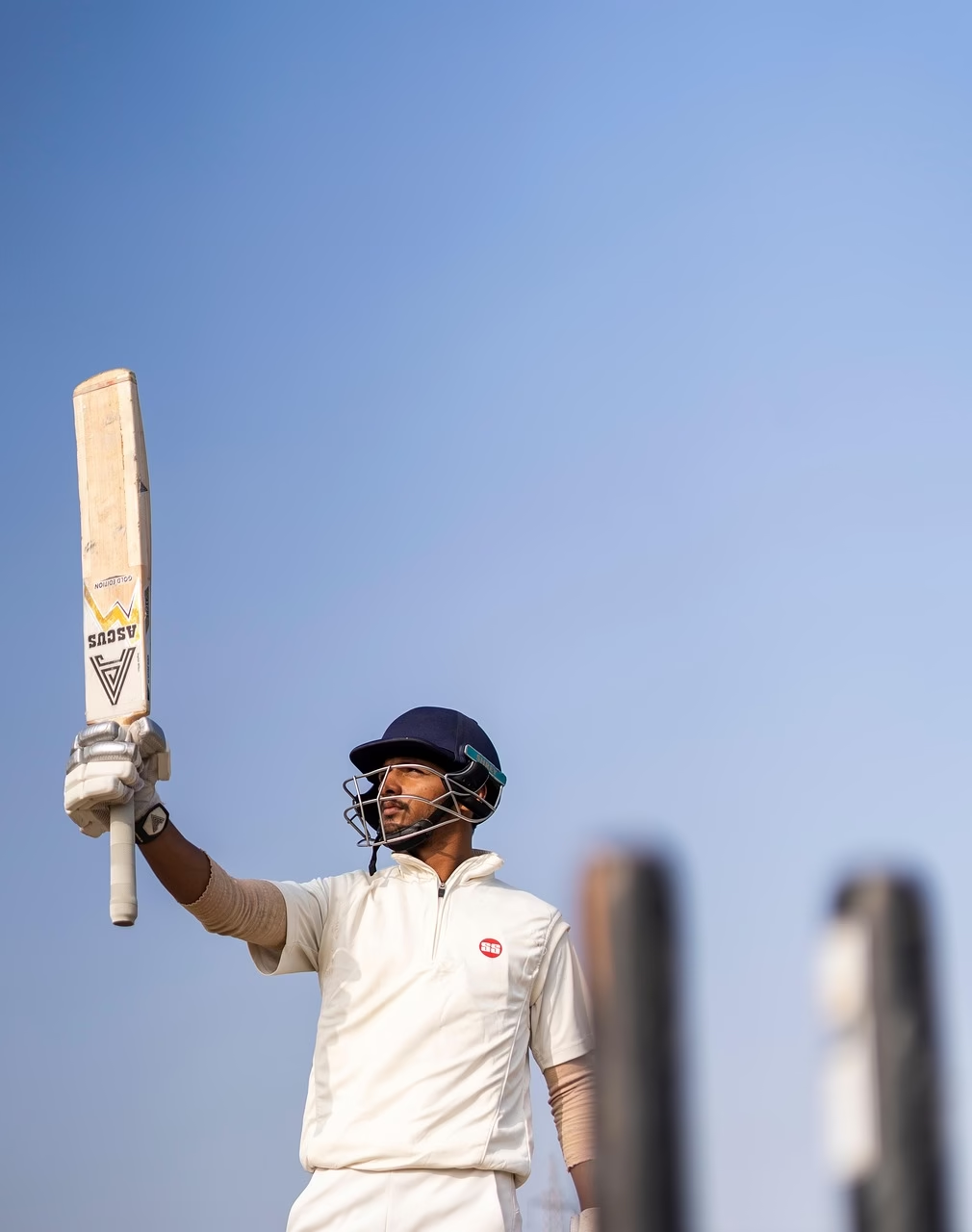
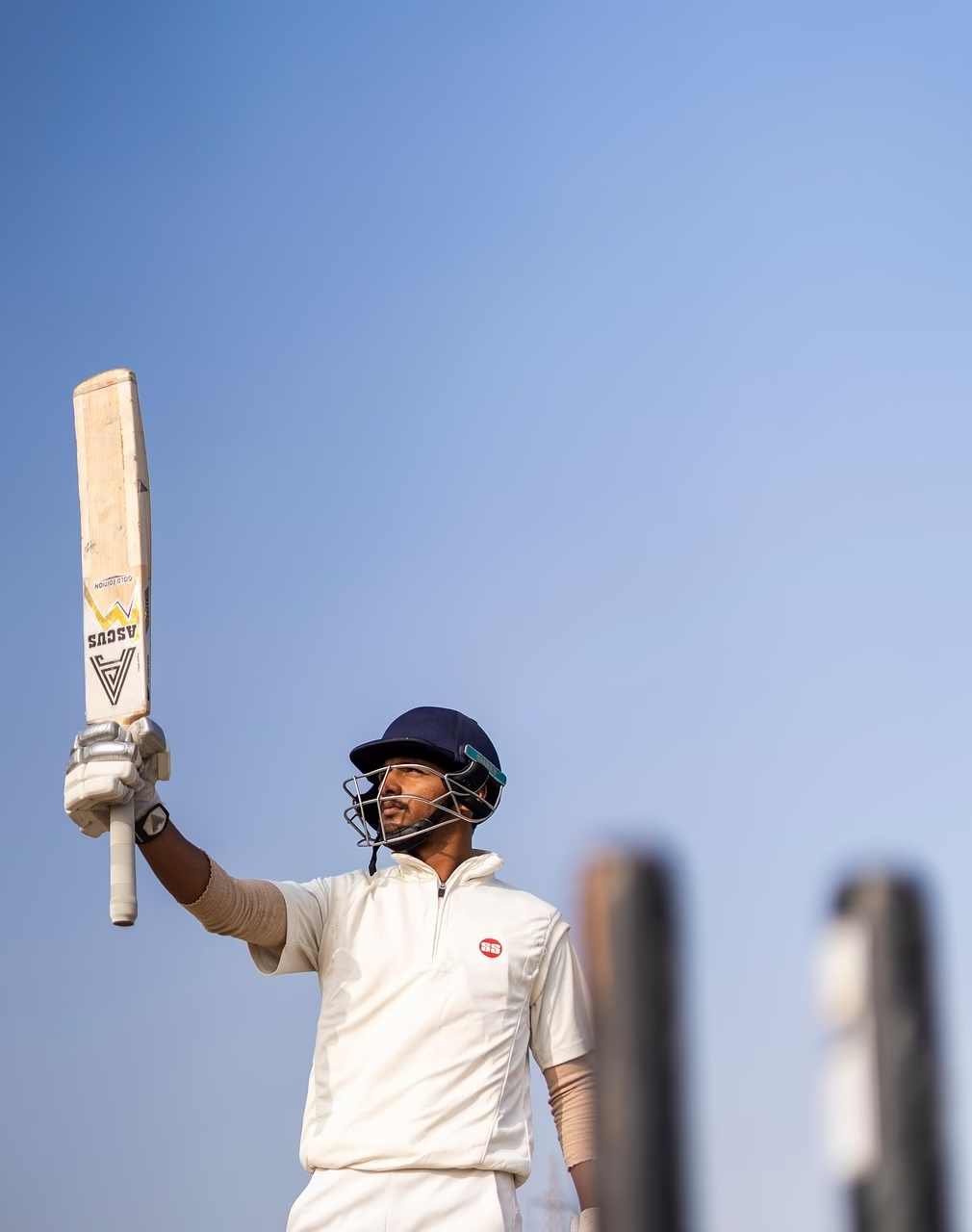
The Indian national cricket team faces a significant test of its bench strength as it prepares to host Afghanistan for their first-ever bilateral One Day International (ODI) series, beginning this week on Indian soil. With key stalwarts Virat Kohli, Hardik Pandya, Mohammed Siraj, and Jasprit Bumrah rested or sidelined, the series offers a high-stakes environment for emerging talent to prove their worth on the international stage.
Context of the Series
This historic series marks a milestone in cricketing relations between the two nations, following years of Afghanistan’s rise as a formidable force in limited-overs cricket. While India remains a global powerhouse, the decision to rotate the squad reflects a broader strategy of workload management ahead of upcoming ICC tournaments. Afghanistan, conversely, enters the series with a full-strength squad, aiming to capitalize on the absence of India’s primary match-winners.
Shifting Dynamics on the Pitch
The absence of senior figures creates a vacuum that requires tactical adjustments in both batting and bowling departments. Without the stabilizing presence of Kohli, the middle order must demonstrate resilience against an Afghan bowling attack known for its world-class spin variety. Afghanistan’s reliance on their experienced ODI unit gives them a unique tactical advantage, as they have played consistently as a cohesive group throughout the past year.
Expert Analysis and Data
Cricket analysts note that Afghanistan’s recent performance in global tournaments has improved their win-loss ratio against full-member nations, making them a dangerous opponent for a depleted Indian side. Data from recent bilateral engagements suggests that the Afghan spin trio, led by Rashid Khan, maintains an economy rate under 5.0 in middle-over spells, a statistic that will challenge India’s experimental lineup. Indian selectors have emphasized that this series is not merely a stopgap measure, but a deliberate effort to expand the player pool.
Industry Implications
For the Board of Control for Cricket in India (BCCI), this series serves as a litmus test for the effectiveness of their domestic pathway programs. If the secondary unit struggles, it may trigger a re-evaluation of the current rotation policy during crucial World Cup cycles. For Afghanistan, a series victory or even a competitive performance would solidify their standing as a top-tier contender, potentially leading to more frequent bilateral opportunities with cricket’s most valuable market.
Future Outlook
Observers should monitor the performance of India’s debutants in the powerplay overs, as these moments will likely define the series outcome. Looking ahead, the tactical flexibility shown by both captains will be the primary indicator of how these teams plan to adapt to the evolving demands of 50-over cricket. Fans should watch for how the Afghan top-order handles the pace variations of India’s younger seamers, as this will dictate the momentum of the opening matches.