



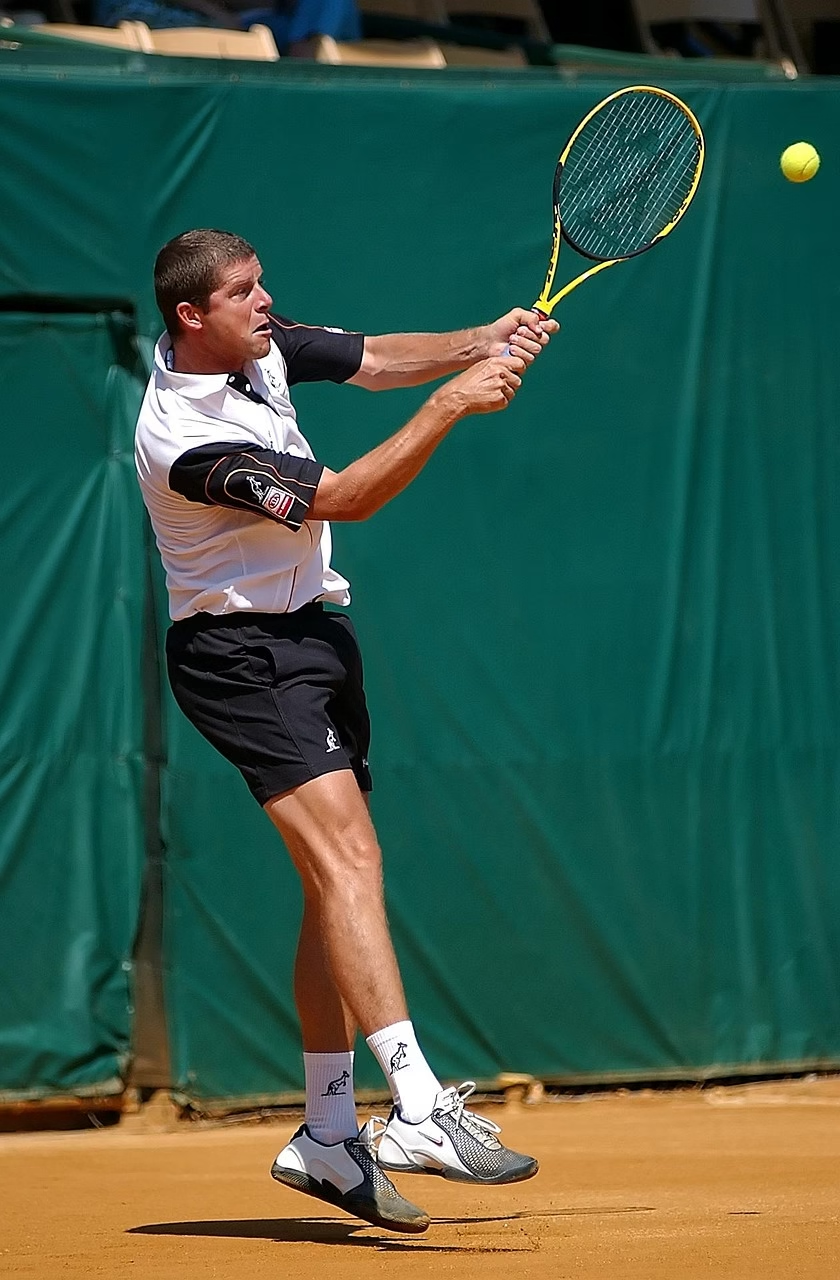
World No. 1 Jannik Sinner suffered a shocking second-round exit at the French Open in Paris this week, falling to unseeded Argentine Juan Manuel Cerundolo in a grueling five-set match as temperatures soared on the clay courts. The Italian tennis star, widely considered a favorite for the title, struggled physically throughout the afternoon, visibly wilting under the intense sun and humidity that characterized the match.
A Historical Struggle with Climate
The French Open has long been known for its unpredictable weather, but recent years have seen a marked increase in extreme heat events during the late May tournament. Players are increasingly forced to manage physical exhaustion that goes beyond the demands of a standard baseline rally.
Sinner’s defeat highlights the growing challenge that climate conditions pose to modern athletes. While the Italian maintained his tactical composure early on, his physical output plummeted in the final two sets, allowing Cerundolo to capitalize on the momentum shift.
Analyzing the Physical Toll
Physiologists suggest that the combination of high humidity and direct sunlight creates a unique environment that inhibits the body’s natural cooling mechanisms. For a player like Sinner, whose game relies on high-intensity movement and sustained aerobic capacity, the environment acted as a secondary opponent.
Data from the tournament’s medical team indicated that court temperatures frequently exceeded 100 degrees Fahrenheit during the midday sessions. Such conditions necessitate a recalibration of training regimens, with many top-ranked players now incorporating heat-acclimatization protocols similar to those used by endurance athletes.
Broader Industry Implications
The elimination of the world’s top seed creates a significant power vacuum in the remainder of the Roland Garros draw. It also forces tennis governing bodies to re-evaluate scheduling policies and the necessity of roof closures during extreme heat waves.
For the average spectator and the professional tour alike, this match serves as a warning regarding the sustainability of current tournament calendars. As global temperatures continue to rise, the ability to perform in extreme heat is becoming as vital to success as a powerful serve or a precise backhand.
Looking Ahead
Observers will be watching closely to see if tournament organizers implement more rigorous heat-mitigation strategies for the remainder of the fortnight. Moving forward, the industry must decide whether to prioritize traditional outdoor play or shift toward more climate-controlled environments to protect player health and maintain competitive integrity.