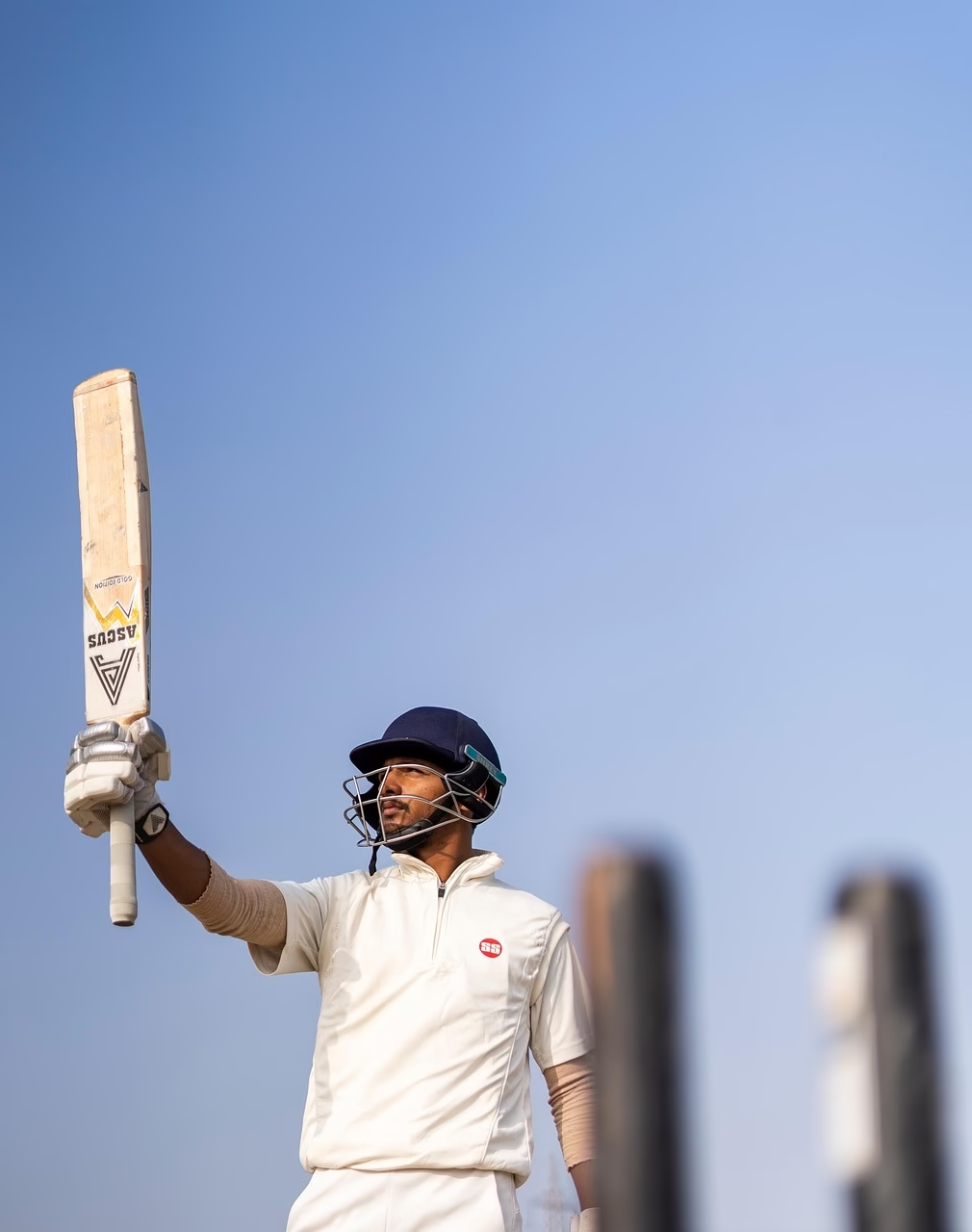



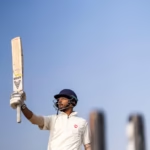

Indian cricket icon Virat Kohli recently affirmed his unwavering commitment to One Day Internationals (ODIs), stating he intends to represent India as long as he feels valued and can contribute meaningfully. This declaration dispels rampant speculation around his participation in the 2027 World Cup cycle, with Kohli emphasizing his desire to play without needing to prove himself, a sentiment crucial for understanding his future in international cricket.
Context: The Enduring Legacy and Future Landscape
Virat Kohli, a cornerstone of Indian cricket for over a decade, has been at the forefront of numerous campaigns, including multiple World Cups. His recent declaration comes amidst ongoing discussions about the longevity of elite athletes in a demanding sport, especially following India’s dominant but ultimately unsuccessful run in the 2023 ODI World Cup.
At 35, an age where many contemporaries begin to wind down their international careers, Kohli continues to be a pivotal figure across all formats. His statement addresses a silent yet persistent question mark over whether he would aim for the 2027 World Cup, a tournament that would see him play at 38 or 39, an age rarely achieved by top batsmen in modern limited-overs cricket.
Kohli’s Stance: Value, Contribution, and Mutual Respect
Kohli’s remarks underscore a mature perspective on his illustrious career. He articulated that his continued presence is contingent upon “mutual respect and value,” a sentiment that resonates with a player who has already achieved legendary status and holds numerous records.
This implies a shift from the relentless pursuit of individual milestones to a focus on collective team success and his indispensable role within that framework. His assertion of “not in a phase where he needs to prove himself” highlights a player confident in his abilities and legacy, seeking a role where his experience and skill are inherently trusted and utilized.
Kohli’s emphasis on “mutual respect and value” is particularly insightful. It suggests a desire to be an integral part of the team’s strategic core, rather than merely a performer. For a player who has carried the batting burden for years and broken numerous records, including surpassing Sachin Tendulkar’s record for most ODI centuries, this signifies a mature understanding of his evolving role. This perspective could influence how other veteran players approach their careers, prioritizing their intrinsic worth to the team over sheer statistical output.
The Road to 2027: A Strategic Outlook
This commitment from one of the world’s premier batsmen provides a crucial anchor for India’s long-term ODI strategy. As the team looks to rebuild and integrate new talent, Kohli’s presence offers continuity and invaluable mentorship for younger players.
Selectors will now face the nuanced task of balancing the experience of veterans with the exuberance of youth, ensuring a competitive squad for the upcoming global challenges. The decision to play will ultimately rest on his sustained form and fitness, but his stated intent provides clarity for team planning.
The road to the 2027 World Cup is long and fraught with challenges. India’s selectors, led by the Board of Control for Cricket in India (BCCI), will need to carefully manage the transition from the current generation to the next. Kohli’s commitment offers a stable foundation, allowing younger players to develop under the guidance of one of the game’s greatest. However, it also means that competition for spots, especially in the batting lineup, will remain fierce. The team management will need to strategize on workload management, ensuring Kohli remains fresh and impactful for the marquee tournaments, while also providing ample opportunities for emerging talents to gain international exposure and experience. This delicate balancing act will be crucial for India’s aspirations.
Expert Views and Precedents in Longevity
Cricket analysts have often discussed the physical and mental toll of international cricket on players in their late 30s. “Maintaining peak performance for over 15 years is an incredible feat,” noted former Indian captain Sunil Gavaskar in a recent sports column, highlighting the unique demands of the sport.
Leading cricket commentator Harsha Bhogle recently articulated on a sports panel, “Kohli’s declaration isn’t just about playing; it’s about playing with purpose. His ‘value’ clause is key. It means he wants to be a game-changer, not just a squad member.” This sentiment is echoed by data analysis from platforms like ESPNcricinfo, which frequently highlight the declining average age of international cricket teams.
However, the unique fitness standards and professional approach of modern athletes like Kohli challenge these trends. For instance, James Anderson, a fast bowler, continues to play Test cricket at 41, demonstrating that longevity, while rare, is achievable with dedication and careful management. Historically, cricketers like Sachin Tendulkar, Muttiah Muralitharan, and Chris Gayle have extended their careers well into their late 30s and early 40s, albeit often with a selective approach to formats. These examples provide a blueprint for Kohli’s potential path, contingent on his continued physical and mental resilience.
Fitness, Form, and the Modern Game
Kohli’s unparalleled fitness regimen has been a hallmark of his career, allowing him to maintain an extraordinary level of performance. Even as he approaches 36, his physical conditioning remains a benchmark for many aspiring cricketers globally.
While form can fluctuate, his ability to adapt and score runs in critical situations has rarely waned. The challenge will be to sustain this intensity over the next three years, managing workload and avoiding injuries, especially with the demanding T20 leagues and Test cricket also on his agenda. His dedication to fitness is a key factor enabling this long-term vision and his ambition to continue playing at the highest level.
Implications for Indian Cricket and Beyond
Kohli’s declaration sets a significant precedent for how senior players define their sunset years in international cricket. It shifts the narrative from inevitable retirement to a more performance- and value-driven continuation, potentially inspiring other athletes.
For Indian cricket, it means potentially having a generational talent guide the next wave of players through another World Cup cycle, offering stability and big-match temperament. The coming years will be crucial in observing how this commitment translates into consistent performance and how the team management integrates his vision into their broader strategy for global dominance, particularly eyeing the 2027 World Cup with renewed hope and a blend of experience and youth. His continued presence promises compelling storylines and a potent blend of experience and youthful dynamism for Indian cricket, making this an ongoing narrative for cricket enthusiasts worldwide.