










Setting the Stage for the Final
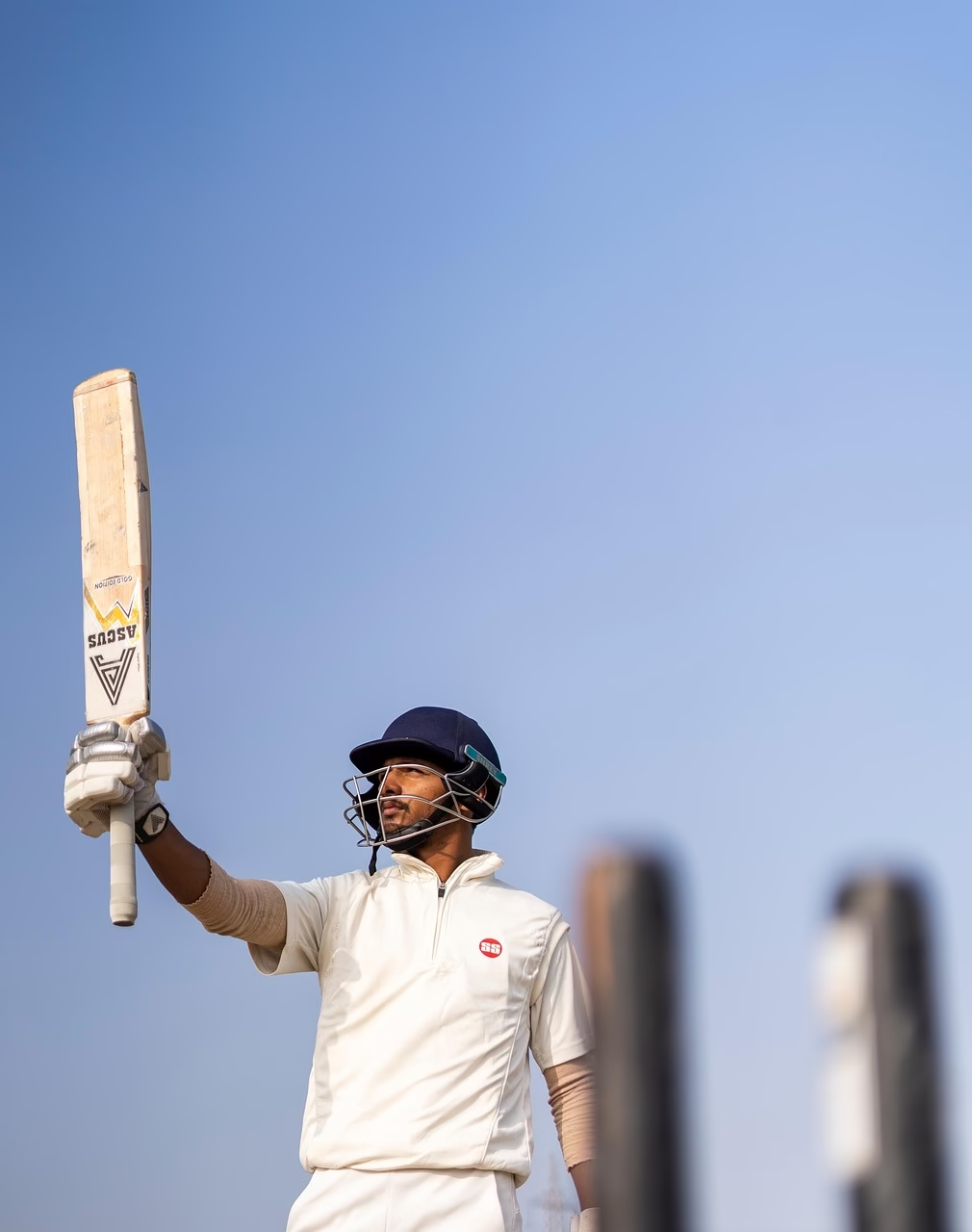
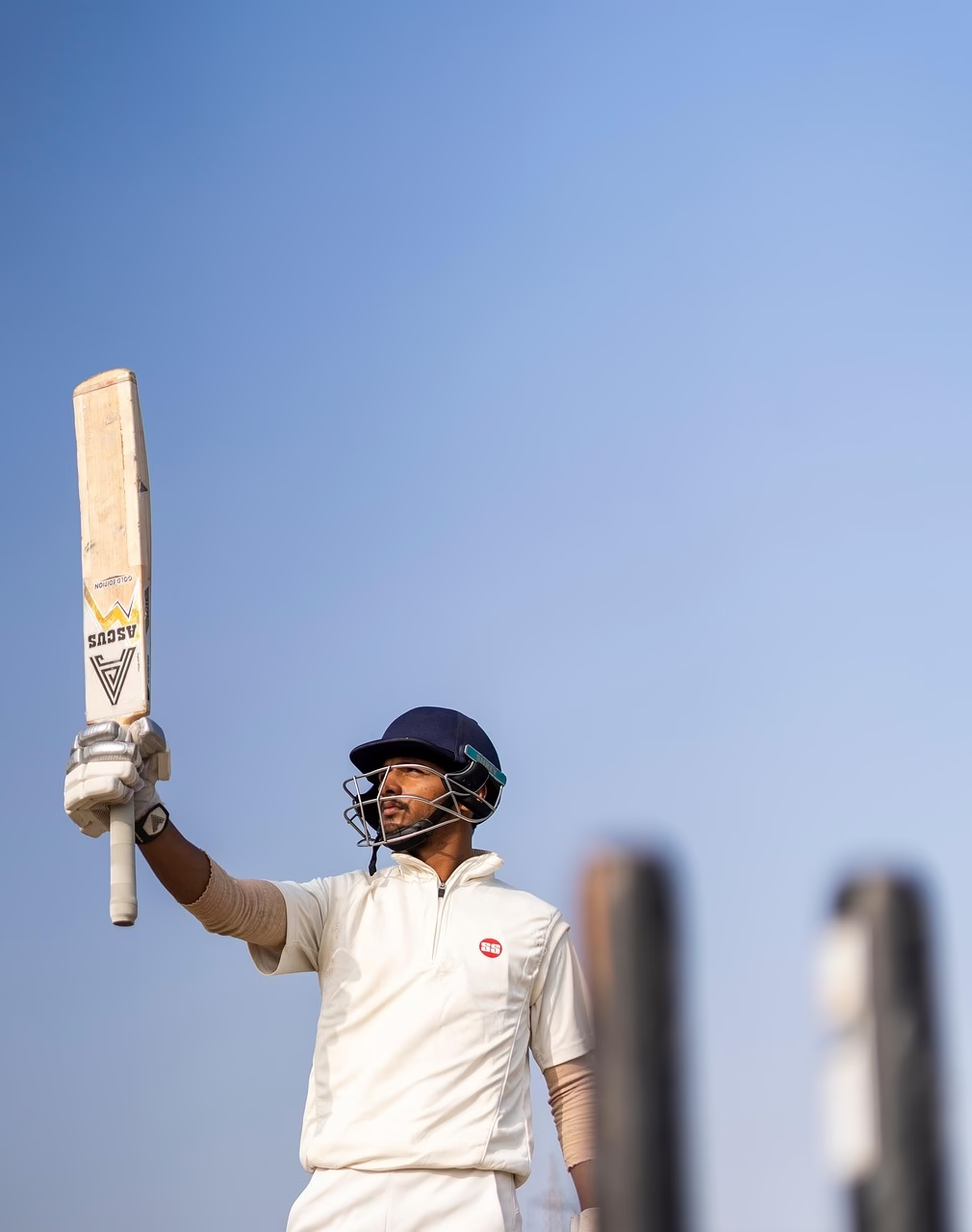
Royal Challengers Bengaluru (RCB) captain Rajat Patidar addressed media members on Friday in Bengaluru, categorically dismissing ongoing speculation regarding his potential future role as India’s T20 captain. Ahead of the Indian Premier League (IPL) final against the Gujarat Titans, Patidar emphasized that his immediate priority remains securing a second consecutive championship title for his franchise rather than pursuing national leadership duties.
The Context of Leadership Transitions
The conversation surrounding India’s T20 captaincy has intensified as the Board of Control for Cricket in India (BCCI) looks toward a new era of leadership following recent international tournament cycles. As a rising star in the domestic circuit, Patidar’s name has frequently surfaced in expert circles as a candidate for long-term captaincy, given his tactical acumen and composure under pressure.
A Culture Shift within RCB
Patidar attributed the team’s sustained success to a fundamental change in the squad’s internal culture. He noted that the transition from individual-centric performances to a model of collective responsibility has been the cornerstone of their recent dominance.
“We have moved away from relying on one or two superstars,” Patidar explained. “The current winning mindset is built on every player understanding their specific role within the larger framework of the team strategy.”
Statistical Trends and Expert Analysis
Data from the current IPL season supports Patidar’s assessment of a balanced team dynamic. RCB’s middle-order efficiency has improved by 15% compared to the previous campaign, a metric that analysts point to as evidence of the team’s improved tactical discipline.
Cricket analysts suggest that Patidar’s ability to remain grounded during high-stakes matches is exactly why he is viewed as a future leadership prospect. According to former national selectors, his refusal to engage with external narratives during the tournament demonstrates the emotional stability required for international captaincy.
Industry Implications
For the broader cricket industry, Patidar’s stance reflects a growing trend among modern athletes who prioritize franchise consistency over the noise of international selection cycles. This approach allows players to maintain peak performance levels without the distraction of media-driven political narratives.
As the IPL final approaches, the focus for the industry remains on whether this shift toward collaborative leadership will become the new standard for domestic teams. Observers will be closely monitoring how Patidar manages the pressure of the final, as this performance may weigh heavily on future national team selection committees looking for a successor to the current leadership guard.