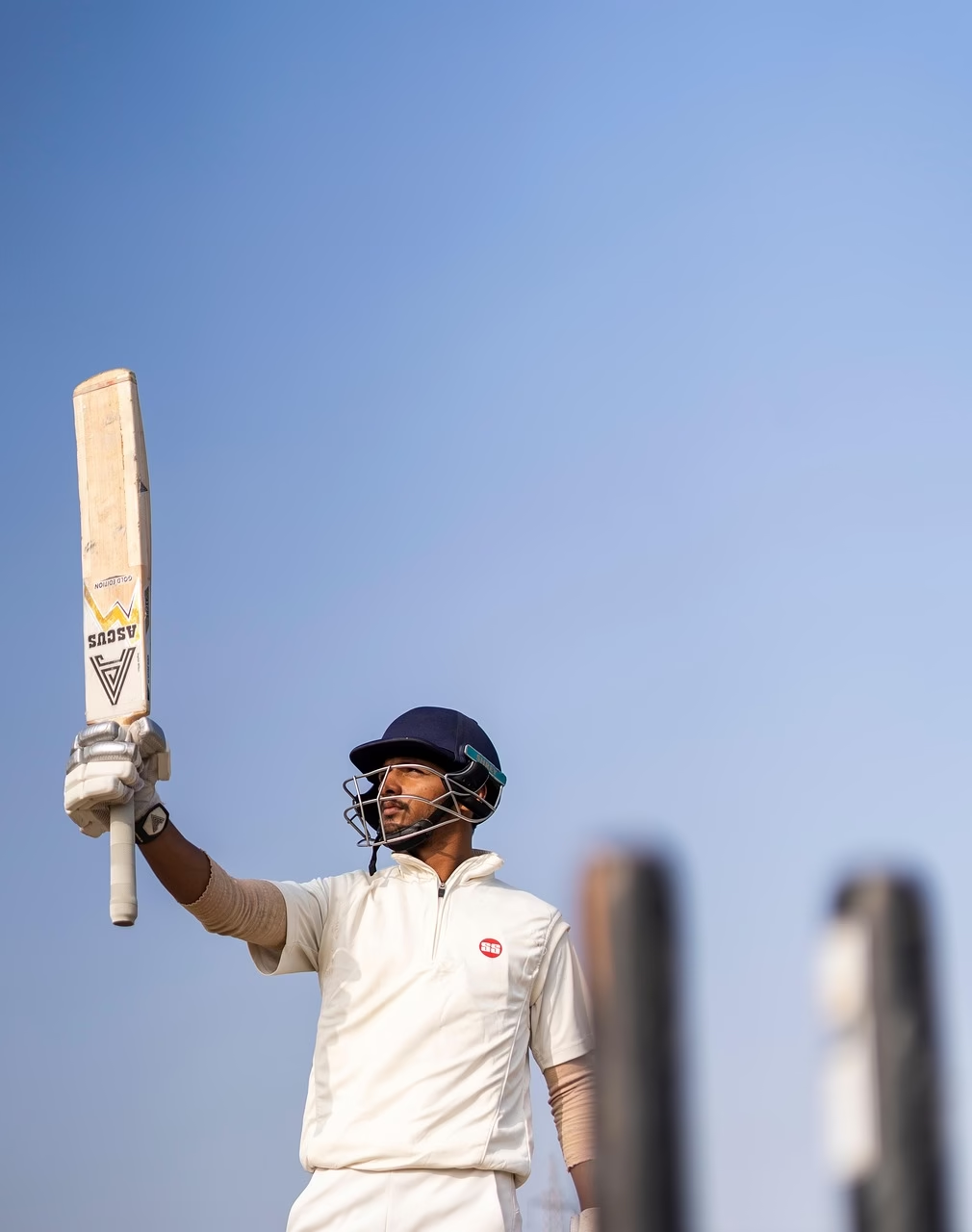






The Indian national cricket team arrived in New Chandigarh on Tuesday to begin preparations for a one-off Test match against Afghanistan, scheduled to commence on June 6. Under the leadership of captain Shubman Gill, the squad is shifting its focus back to the traditional red-ball format following the conclusion of the high-intensity IPL 2026 season. This fixture serves as a critical bridge for the Indian side as they look to calibrate their strategies ahead of a demanding slate of overseas tours later this year.
A Return to the Traditional Format
For the Indian team, this Test represents a tactical reset. After months of white-ball cricket, the transition to the five-day game requires a fundamental adjustment in technique and patience. The team management has emphasized that this match is not merely a formality but a vital opportunity to identify potential starters for upcoming international series.
Afghanistan, meanwhile, enters the match with a point to prove. Since gaining full Test status, the side has sought consistent exposure against top-tier nations. This match offers them a chance to test their bowling attack against one of the world’s most formidable batting lineups in a controlled environment.
Historical Context and Competitive Dynamics
The two nations last met in the Test arena in 2018, a match that saw India secure a dominant victory within two days. While that encounter highlighted the gap in experience at the time, the landscape of international cricket has shifted significantly since then.
Afghanistan’s core has gained substantial experience in global leagues, and their spin-bowling department is widely considered among the most challenging to face. Indian analysts note that the surface in New Chandigarh is expected to provide assistance to both pace and spin, ensuring a fair contest of skills.
Expert Perspectives and Strategic Objectives
Former cricket analysts suggest that India’s selection for this match will be highly indicative of their long-term vision. With several senior players managing workloads, the inclusion of younger talent under Gill’s captaincy signals a transition phase for the national team.
Data from recent domestic red-ball tournaments shows that Indian players have been working on defensive resilience, a metric that will be tested thoroughly by the Afghan bowlers. The match will also serve as a barometer for India‘s middle-order stability, which has been a subject of intense scrutiny in recent months.
Future Implications for International Cricket
The outcome of this Test will have immediate implications for the ICC World Test Championship standings. A victory for India would solidify their position at the top of the table, whereas a competitive performance from Afghanistan would further justify the expansion of Test cricket to newer, rising nations.
Observers are particularly watching the tactical evolution of Shubman Gill’s leadership style during the match. As the team looks toward the next cycle of international fixtures, the ability to adapt to varying conditions—starting with this one-off encounter—will be the defining metric for the coaching staff. Fans should monitor the team sheet closely on the morning of June 6, as it will reveal the specific personnel India intends to rely on for their challenging winter schedule.