









The Evolving Landscape of Melbourne Park
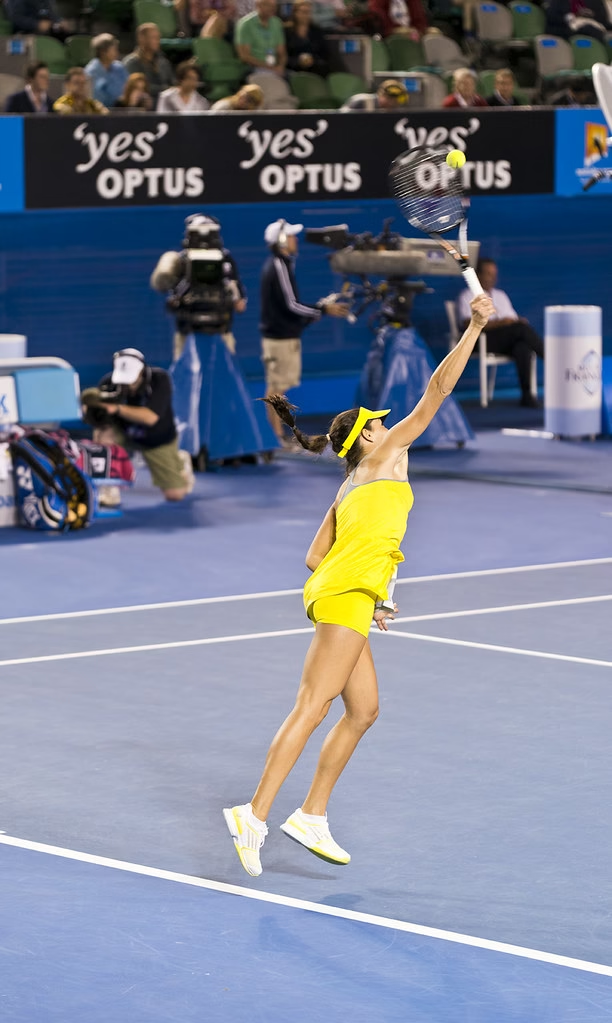
The Australian Open, long celebrated as the ‘Happy Slam’ of the professional tennis circuit, is currently navigating a pivotal moment of transition in Melbourne as tournament organizers weigh calls for structural modernization against the event’s deep-rooted traditions. While the Grand Slam continues to break attendance records and secure lucrative broadcasting deals, internal pressure from players and shifting audience expectations are forcing a re-evaluation of the tournament’s format and entertainment offerings.
Historically, the Australian Open has distinguished itself through rapid adoption of technology, including the early implementation of the Hawk-Eye line-calling system and the widespread installation of retractable roofs. These innovations helped elevate the tournament from a remote, end-of-year event to a premier global spectacle. However, as the sport competes for attention in a saturated digital media landscape, stakeholders are debating whether the traditional five-set match format for men remains viable or if the tournament should pursue bolder, more radical changes to enhance engagement.
The Debate Over Match Formats
A primary point of contention involves the physical toll on players and the pacing of the broadcast product. Recent discussions have centered on whether to standardize match lengths, with some advocates suggesting that moving toward a universal best-of-three-set format for men could improve television ratings and player longevity. Proponents of this shift argue that shorter, more intense matches are better suited to modern streaming habits, where viewers often prefer condensed, high-stakes action over five-hour endurance marathons.
Conversely, purists argue that the five-set format is the hallmark of Grand Slam tennis, representing the ultimate test of psychological and physical resilience. Data from the Association of Tennis Professionals (ATP) suggests that while long matches can cause scheduling backlogs, they also generate significant social media engagement during the final sets. The challenge for Melbourne organizers lies in maintaining this prestige while ensuring the tournament remains efficient enough to avoid the late-night finishes that have plagued recent editions.
Enhancing the Fan Experience
Beyond the court, the Australian Open is aggressively expanding its entertainment footprint to transform the precinct into a year-round cultural destination. The integration of live music, high-end culinary experiences, and interactive fan zones has turned the event into an ‘entertainment festival’ rather than just a tennis tournament. This strategy has proven successful, with attendance figures consistently surpassing 800,000 visitors, making it one of the most attended sporting events globally.
However, critics note that the focus on ‘festivalization’ may distract from the core sport. Industry analysts warn that if the balance shifts too far toward entertainment, the tournament risks alienating traditional fans who prioritize match quality over ancillary activities. Maintaining the delicate equilibrium between sport and spectacle remains the central strategic hurdle for Tennis Australia as they look toward the next decade of planning.
The Road Ahead
Looking forward, the tournament is expected to prioritize sustainability initiatives and further digitalization of the spectator experience. Industry observers suggest that the next few years will see increased investment in augmented reality (AR) features for remote viewers, allowing fans to track ball trajectory and player biometrics in real-time. As the Australian Open approaches its next cycle of media rights negotiations, the pressure to deliver a product that appeals to both aging traditionalists and the younger ‘Gen Z’ demographic will likely dictate the pace of future changes.