




Novak Djokovic’s premature exit from the 2024 French Open has sent shockwaves through the tennis world, signaling a potential turning point in the sport’s hierarchy. As the 37-year-old Serbian superstar struggles with recurring physical ailments and a lack of sustained dominance, the clay courts of Roland-Garros served as the stage for a shifting narrative that suggests the long-reigning era of the ‘Big Three’ is finally yielding to a younger, more resilient generation.
The End of an Era of Invincibility
For nearly two decades, Novak Djokovic has defined the upper echelon of professional tennis, setting records for weeks at world number one and total Grand Slam titles. However, the recent withdrawal from the French Open due to a knee injury highlights a vulnerability that has rarely plagued the veteran during his prime.
Historically, Djokovic has relied on unparalleled recovery and physical conditioning to outlast opponents. Now, his body is showing clear signs of wear and tear, forcing fans and analysts alike to question how many more deep tournament runs remain in his career.
A New Generation Ascends
The vacuum created by the decline of Djokovic, coupled with Rafael Nadal’s prolonged absence and Roger Federer’s retirement, has paved the way for a new cohort of stars. Players like Carlos Alcaraz and Jannik Sinner are no longer just prospects; they are the new benchmarks for athletic performance.
Data from the Association of Tennis Professionals (ATP) shows a marked increase in the velocity and spin rates of the younger guard. This evolution in playing style places a higher premium on explosive movement, a trait that naturally diminishes with age.
The Statistical Reality
Analytical models suggest that players reaching the age of 37 face a significant statistical drop-off in win percentages against top-ten opponents. Djokovic’s recent performance metrics indicate that while his tactical acumen remains elite, his ability to grind out long, five-set matches is being tested more severely than ever before.
Industry experts point out that the absence of a dominant figure has made the Grand Slam circuit more volatile. The betting markets have reflected this shift, with odds for tournament winners becoming increasingly spread out rather than centered on a single clear favorite.
Implications for the Sport
The immediate consequence for the tennis industry is a surge in competitive parity, which often translates to higher viewership numbers for early-round matches. Fans are no longer guaranteed a predictable final, adding a layer of intrigue to every tournament bracket.
For sponsors and stakeholders, the transition period presents a branding challenge. The market must now pivot to cultivate the narratives of rising stars who lack the multi-decade track record of the previous legends.
What to Watch Next
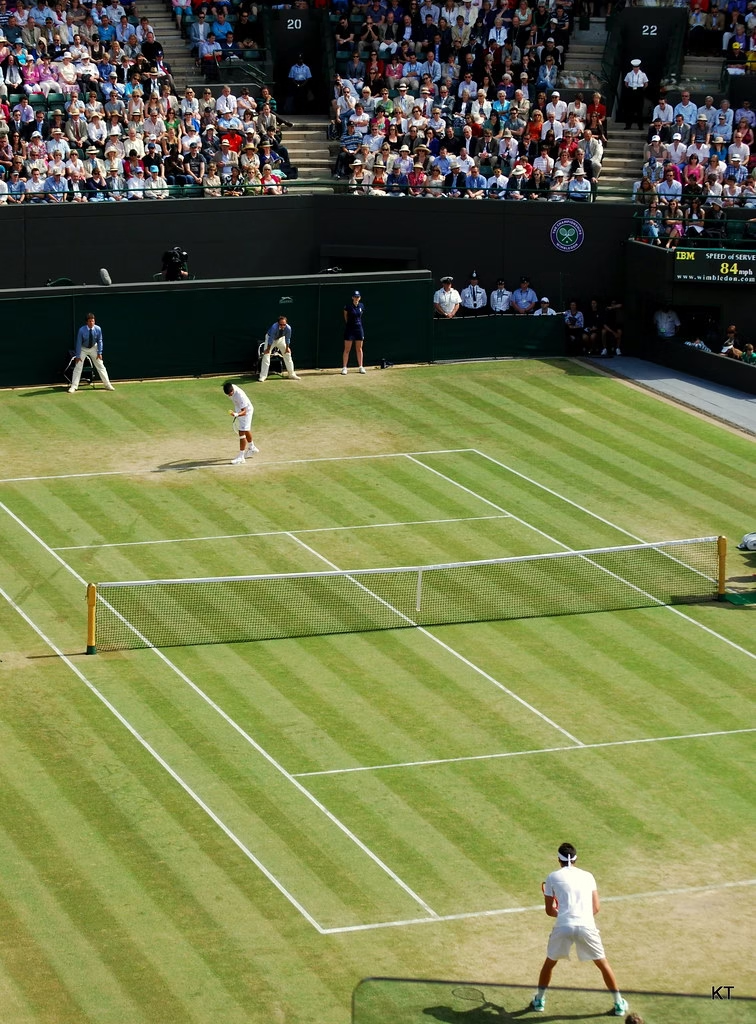
The eyes of the tennis world will now turn to the grass courts of Wimbledon, where surface speed and movement requirements differ drastically from clay. Observers will be monitoring Djokovic’s recovery timeline closely, as his participation in the upcoming Olympic Games remains a primary goal for the remainder of his season.
If Djokovic chooses to bypass certain tour events to preserve his fitness, it will confirm a strategic shift toward quality over quantity. Ultimately, the remainder of the 2024 season will serve as a litmus test for whether the sport’s most decorated player can find one final gear or if the torch has been permanently passed to the next generation.